
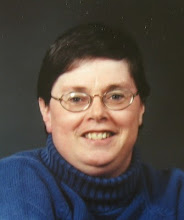
Kathleen Ernst, who writes historical fiction (including some of the American Girl books) and who used to do living history performances for a living, is hosting me on her blog:
http://sitesandstories.wordpress.com/2012/04/11/meet-meg-justus/
This one's about the Job Carr Cabin Museum and quilting in public [g].
Showing posts with label volunteering. Show all posts
Showing posts with label volunteering. Show all posts
Wednesday, April 11, 2012

Sunday, January 1, 2012
A time to reckon, I guess
These were my goals this time last year
1) Complete my first two freelance museum gigs.
I did. Both well enough to get rehired [g].
2) Find more potential clients and land more gigs.
I found one more new client, which I've been working steadily for since April, plus, as I said, rehired by both my old clients, although one has since gone dormant till spring for lack of funds.
3) Go to more museum workshops and a conference, and continue Heritage League committee work.
I've been to two workshops and taken two classes, but I didn't make it to any conferences. The HL committee I was on finished its work in September, but I've been asked to be on the board, and probably will.
4) Write the mystery house rough draft.
Well, no. I've been working on the Yellowstone trilogy, though, and I will get back to it after I'm done with it.
5) Revise Sojourn, last year's NaNo book.
Again, no, because of the Yellowstone trilogy. It's in the pipeline, though.
6) Figure out what I'm going to do about the rest of the Yellowstone trilogy (which may end up as a duology), and get back to work on it.
I did figure it out, and what I did was do one more edit on Repeating History, create a cover, and format it for Amazon and Smashwords. I self-published it in early August, and it's been selling a steady trickle of copies ever since.
And, no, the Yellowstone trilogy is not going to be a duology. True Gold, the second book, has an almost complete rough draft, and I have begun revisions.
7) Finish piecing the Imbolc Flame quilt, and finish quilting the Yule Log Cabin quilt. Maybe start a nice, simple throw of animal fabrics and the animal cross-stitch patterns I did last summer.
The Imbolc Flame quilt is pieced. I haven't layered it yet, but I'll get there. The Yule Log Cabin, well... It's the disaster I finally ended up giving away partly quilted. First time I've ever done that with a quilt. The throw has just started to materialize (sorry, bad pun). I started piecing on it last week. I've also created several quilted pillows and am almost finished quilting a baby quilt for the great-nibling due in April.
8) Find some good 6" square flower cross-stitch patterns for my Beltane quilt and begin stitching them.
I've stitched half a dozen of them, but I got sidetracked with some other projects, including a cross-stitched pillow. The Beltane quilt will happen. Eventually.
9) Go to Crater Lake, Yosemite, and WorldCon in Reno in August with my friend M.
We went, we had a great time [g].
10) Do more research on Washington history -- find some more good stuff for my writing.
I did some, but I got kind of sidetracked researching True Gold.
11) Blog regularly.
Weell... Regularly, but not nearly as often as I would have liked.
And now this year's goals
1) Complete the new museum exhibit by the end of February, and keep getting rehired to continue the textile collection work.
2) Pursue more collections work as opposed to exhibits work. Only sign with the dormant client if they have sufficient funds to finish what they hire me to do and a concrete objective for that work. Sign a contract with at least one new client.
3) Join the Heritage League board. Take a Photoshop class. Pursue other career educational opportunities including the Washington Museum Association conference, in Seattle this year.
4) Finish True Gold and self publish it by the first of June.
5) Write Finding Home (the third book in the Yellowstone trilogy) and self-publish it, hopefully by the end of the year.
6) Learn better book marketing skills and put them into practice.
7) Redecorate the living room. My living room has had a lighthouse theme for the last twenty years, and it's time for a change. I have picked out some cross-stitch patterns and quilt fabrics with North American wild animals on them, so it's a start.
8) Finish the baby quilt. Finish the animal sofa throw. Make a new table runner for the sofa table. Layer the Imbolc Flame quilt and start quilting it.
9) Make new cross-stitch pictures for the living room. I have eight picked out. We'll see how many I can finish this year.
10) Make my first long car trip alone in five years [sigh]. The plan is to take off for two or three weeks in June and drive east. Maybe a night or two in Yellowstone to scatter bookmarks, but I want to go farther east than that, maybe as far as Theodore Roosevelt National Park in North Dakota. I also want to visit some of the historic sites like Fort Benton.
11) Get the garden cleaned up.
12) Blog more frequently.
So, what are your goals for 2012?
1) Complete my first two freelance museum gigs.
I did. Both well enough to get rehired [g].
2) Find more potential clients and land more gigs.
I found one more new client, which I've been working steadily for since April, plus, as I said, rehired by both my old clients, although one has since gone dormant till spring for lack of funds.
3) Go to more museum workshops and a conference, and continue Heritage League committee work.
I've been to two workshops and taken two classes, but I didn't make it to any conferences. The HL committee I was on finished its work in September, but I've been asked to be on the board, and probably will.
4) Write the mystery house rough draft.
Well, no. I've been working on the Yellowstone trilogy, though, and I will get back to it after I'm done with it.
5) Revise Sojourn, last year's NaNo book.
Again, no, because of the Yellowstone trilogy. It's in the pipeline, though.
6) Figure out what I'm going to do about the rest of the Yellowstone trilogy (which may end up as a duology), and get back to work on it.
I did figure it out, and what I did was do one more edit on Repeating History, create a cover, and format it for Amazon and Smashwords. I self-published it in early August, and it's been selling a steady trickle of copies ever since.
And, no, the Yellowstone trilogy is not going to be a duology. True Gold, the second book, has an almost complete rough draft, and I have begun revisions.
7) Finish piecing the Imbolc Flame quilt, and finish quilting the Yule Log Cabin quilt. Maybe start a nice, simple throw of animal fabrics and the animal cross-stitch patterns I did last summer.
The Imbolc Flame quilt is pieced. I haven't layered it yet, but I'll get there. The Yule Log Cabin, well... It's the disaster I finally ended up giving away partly quilted. First time I've ever done that with a quilt. The throw has just started to materialize (sorry, bad pun). I started piecing on it last week. I've also created several quilted pillows and am almost finished quilting a baby quilt for the great-nibling due in April.
8) Find some good 6" square flower cross-stitch patterns for my Beltane quilt and begin stitching them.
I've stitched half a dozen of them, but I got sidetracked with some other projects, including a cross-stitched pillow. The Beltane quilt will happen. Eventually.
9) Go to Crater Lake, Yosemite, and WorldCon in Reno in August with my friend M.
We went, we had a great time [g].
10) Do more research on Washington history -- find some more good stuff for my writing.
I did some, but I got kind of sidetracked researching True Gold.
11) Blog regularly.
Weell... Regularly, but not nearly as often as I would have liked.
And now this year's goals
1) Complete the new museum exhibit by the end of February, and keep getting rehired to continue the textile collection work.
2) Pursue more collections work as opposed to exhibits work. Only sign with the dormant client if they have sufficient funds to finish what they hire me to do and a concrete objective for that work. Sign a contract with at least one new client.
3) Join the Heritage League board. Take a Photoshop class. Pursue other career educational opportunities including the Washington Museum Association conference, in Seattle this year.
4) Finish True Gold and self publish it by the first of June.
5) Write Finding Home (the third book in the Yellowstone trilogy) and self-publish it, hopefully by the end of the year.
6) Learn better book marketing skills and put them into practice.
7) Redecorate the living room. My living room has had a lighthouse theme for the last twenty years, and it's time for a change. I have picked out some cross-stitch patterns and quilt fabrics with North American wild animals on them, so it's a start.
8) Finish the baby quilt. Finish the animal sofa throw. Make a new table runner for the sofa table. Layer the Imbolc Flame quilt and start quilting it.
9) Make new cross-stitch pictures for the living room. I have eight picked out. We'll see how many I can finish this year.
10) Make my first long car trip alone in five years [sigh]. The plan is to take off for two or three weeks in June and drive east. Maybe a night or two in Yellowstone to scatter bookmarks, but I want to go farther east than that, maybe as far as Theodore Roosevelt National Park in North Dakota. I also want to visit some of the historic sites like Fort Benton.
11) Get the garden cleaned up.
12) Blog more frequently.
So, what are your goals for 2012?
Saturday, January 15, 2011
so much
For my new year's goal to get my blogging back up to speed again.
I thought I was coming down to crunch time on the exhibit project, but due to circumstances which are due to someone else's deadlines, it looks like the exhibit is not going to open until March (it was originally scheduled to open in mid-February, then the end of February). I'm ambivalent about this. I'm about to the point where I want to get it finished, but then again, two to four more weeks of a chance to improve on what I've already got done is nothing to sneeze at, either.
The photo curation project has acquired several volunteers. My good friend L donated a few hours of her time, and one of the members of the collections committee (except for me, this is an all-volunteer organization) has been giving me about six hours a week of his time, too. Then there's the college student whose school requires her to do a certain amount of volunteer work between semesters. So I have her for about fifteen hours a week for the next couple of weeks. All of a sudden the work is going much faster than it had been. Having someone to a) label photos and their sleeves before I catalog them on the computer, and b) scan the photos after I've done the cataloging, has really sped up the process. Quite amazing.
I've never been on the "working with volunteers" end of the spectrum as opposed to "being one of the volunteers" before. Anyone have any good advice on the subject?
I thought I was coming down to crunch time on the exhibit project, but due to circumstances which are due to someone else's deadlines, it looks like the exhibit is not going to open until March (it was originally scheduled to open in mid-February, then the end of February). I'm ambivalent about this. I'm about to the point where I want to get it finished, but then again, two to four more weeks of a chance to improve on what I've already got done is nothing to sneeze at, either.
The photo curation project has acquired several volunteers. My good friend L donated a few hours of her time, and one of the members of the collections committee (except for me, this is an all-volunteer organization) has been giving me about six hours a week of his time, too. Then there's the college student whose school requires her to do a certain amount of volunteer work between semesters. So I have her for about fifteen hours a week for the next couple of weeks. All of a sudden the work is going much faster than it had been. Having someone to a) label photos and their sleeves before I catalog them on the computer, and b) scan the photos after I've done the cataloging, has really sped up the process. Quite amazing.
I've never been on the "working with volunteers" end of the spectrum as opposed to "being one of the volunteers" before. Anyone have any good advice on the subject?
Wednesday, August 4, 2010
geyser gazing
It has occurred to me that some people might not know what a geyser gazer is (see my profile, at left). If you've ever been to Yellowstone, to the Upper Geyser Basin in particular, you may see some folks walking around, or sitting around in strategic places, with walkie talkies and the occasional notepad. You might even hear one of the walkie talkies go off, with a staticky, "Daisy, 1114, ie," or "Riverside, 1420." IE, by the way, means "in eruption," meaning that the gazer who saw it did not see the beginning of the eruption.
Geyser gazers are the people who make geyser eruption time prediction possible. They are volunteers, most of whom belong to GOSA, the Geyser Observation and Study Association. Many of them also subscribe to a mailing list, which is associated with GOSA but not part of it. Some are professionals, but most are enthusiastic amateurs. All of them are passionately interested in geysers, and spend as much time as possible in Yellowstone observing, communicating, and recording geyser activity, in conjunction with the park rangers and the visitor center staff.
Since most geyser prediction is predicated on average intervals, lengths of eruptions, and other, more complicated algorithms, knowing when and for how long a geyser erupted is crucial to being able to predict what it will do next. Making a good educated guess (geysers are not faucets) as to what a geyser will do next makes it possible for more people to see it.
I don't lay claim to being anything more than a very beginning apprentice gazer, and I can't spend nearly as much time in Yellowstone learning more as I'd like. But I do have a walkie-talkie (gifted to me by a very good friend), and I have had the excitement of being the first to call in an eruption.

It's all terribly addictive [g].
So the next time you see someone walking around the Upper Geyser Basin with a walkie talkie and a notepad, be glad, because that next eruption of Grand? Just may have been predicted with their help!

Geyser gazers are the people who make geyser eruption time prediction possible. They are volunteers, most of whom belong to GOSA, the Geyser Observation and Study Association. Many of them also subscribe to a mailing list, which is associated with GOSA but not part of it. Some are professionals, but most are enthusiastic amateurs. All of them are passionately interested in geysers, and spend as much time as possible in Yellowstone observing, communicating, and recording geyser activity, in conjunction with the park rangers and the visitor center staff.
Since most geyser prediction is predicated on average intervals, lengths of eruptions, and other, more complicated algorithms, knowing when and for how long a geyser erupted is crucial to being able to predict what it will do next. Making a good educated guess (geysers are not faucets) as to what a geyser will do next makes it possible for more people to see it.
I don't lay claim to being anything more than a very beginning apprentice gazer, and I can't spend nearly as much time in Yellowstone learning more as I'd like. But I do have a walkie-talkie (gifted to me by a very good friend), and I have had the excitement of being the first to call in an eruption.

I called this eruption of Daisy Geyser
It's all terribly addictive [g].
So the next time you see someone walking around the Upper Geyser Basin with a walkie talkie and a notepad, be glad, because that next eruption of Grand? Just may have been predicted with their help!

Obligatory Grand Geyser photo (it's my favorite)
Wednesday, July 21, 2010
Done again
This appears to be my week (technically -- from Friday through the following Wednesday, at any rate) for finishing projects.
Today I finished The Hat Project. Completely. Utterly. Right down to the printed browsing records (which is what the curator prefers to have when she's preparing exhibits, rather than browsing on the computer in PastPerfect). All neatly in order.
The hats themselves have long since been organized and curated and recorded and re-stored within an inch of their lives.
And now it's time to move on to the next project. If you need a freelance museum curator/exhibits person/writer, and you're either in the greater Tacoma, Washington, area, or need something I can do for you via a distance connection, I'm your woman.
So do please feel free to contact me, here or at my website.
Thank you!
Today I finished The Hat Project. Completely. Utterly. Right down to the printed browsing records (which is what the curator prefers to have when she's preparing exhibits, rather than browsing on the computer in PastPerfect). All neatly in order.
The hats themselves have long since been organized and curated and recorded and re-stored within an inch of their lives.
And now it's time to move on to the next project. If you need a freelance museum curator/exhibits person/writer, and you're either in the greater Tacoma, Washington, area, or need something I can do for you via a distance connection, I'm your woman.
So do please feel free to contact me, here or at my website.
Thank you!
Monday, July 19, 2010
quilting in public
For some reason, that always sounds faintly risqué. Not sure why...
Anyway, yesterday was Pioneer Day at the Job Carr Cabin Museum, and here is the pictorial proof:


The weather was beautiful, if almost chilly. Pioneer Day was a lot of fun. I hope it was for everyone else, too.
Anyway, yesterday was Pioneer Day at the Job Carr Cabin Museum, and here is the pictorial proof:

This is the gold-panning activity area. It's very popular with kids, mostly because there's water and sand in that trough. Lots of opportunity to get wet and be messy. And find shiny things.

This is the old-fashioned clothes-washing activity area. We also had areas for learning to churn butter, grind coffee, shuck corn, hang wallpaper (one of the many things Job did to earn a living once the population grew was hang wallpaper), and crochet.

Several areas were set up for demonstrations, as well. Besides my quilting, a weaver shared the porch with me, and under the tents we had a blacksmith and these extremely talented woodcarvers.

And our brand-new canoe display. This is a permanent exhibit, and it both tells about how Job found his land claim (by paddling along Commencement Bay in a canoe) and provides a nifty place for kids to play.

Oh, and here I am, quilting in public. The dress and apron/pinafore belong to the museum. The project I'm working on is a whole-cloth pattern (whole-cloth is the term for a quilt that's just one big piece of cloth, not pieced or appliqued or whatever). It will eventually become a pillow. The thimble, if you're curious, is leather. And, no, I don't use a hoop or a frame. In 22 years of quilting, I've never been comfortable with one.
The weather was beautiful, if almost chilly. Pioneer Day was a lot of fun. I hope it was for everyone else, too.
Friday, July 16, 2010
The turtles have won the race
And here is the finished exhibit (well, except for a couple of small fiddly things I will take care of the next time I'm there):


Everything in both wall cases is new. So is the "birthplace" sign above them.
Here's closeups of both cases:

Just below the header is a timeline. Below that is a picture of the original cabin, and one of the site pre-cabin. Below that is a model of the cabin, and a photo of Job Carr, Tacoma's first mayor (portrayed by actor Ray Egan), and Brian Ebersole, the mayor of Tacoma at the time the replica was built. Below that is a list of the movers and shakers who caused the replica to be built, and an architect's rendering of the location for the new cabin. Behind everything are cutouts from the blueprints and elevations of the cabin.

More timeline below the heading. Then a photo of the construction, and statistics on the number of logs used to build the replica. Below that, some text telling about who was involved in the construction, and another construction photo. At the bottom, a panoramic photo of the dedication. More blueprint clips on the back wall.
I swear I spent more time hunting down enough "stuff" to tell the story of the reconstruction of the cabin -- board members, a local photographer, the architect, searching through the museum itself -- than I did actually putting the thing together. And it took me about a week for the actual putting together.
Right now, the fact that the exhibit is done trumps anything I may feel about how it looks, the story it tells, etc. It's finished. And, for the moment, so am I [g].
BTW, if you're in the Tacoma, Washington vicinity this coming Sunday, July 18th, please do come by the cabin and take a history walk and join in some living history activities. You might even get to watch me quilt in public.
Wednesday, July 14, 2010
moving like a herd of turtles
As a friend I knew back in Appalachia used to say.
I've spent most of the last couple of weeks working on the 10th anniversary exhibit for the Job Carr Cabin Museum, and I'm almost there.
I actually spent most of the time hunting down stuff to actually put in the exhibit, which will cover from 1997, when two local businesswomen came up with the idea to build the replica of the cabin, to December 2, 2000, the day the cabin was dedicated. I have two whole artifacts -- a miniature of the cabin, and some of the nails left over from the construction (they're not standard-brand nails, but the kind that look hand-made at your local blacksmith shop). The architect who designed the replica gave me some blueprints I'm going to attach to the fabric on the back of the display. Everything else is photographs. Some came from a local business, some from one of the two businesswomen who were the driving force behind the reconstruction, and some from the museum itself.
The one thing that amazed me (and not in a good way) was how there were no pictures of the groundbreaking. Or of the park pre-cabin (a very nice woman at the parks department searched for me, but even they didn't have anything).
But I did eventually come up with enough items to make the exhibit actually look like something.
These are the cases, after I installed the backdrop fabric:


I've spent most of the last couple of weeks working on the 10th anniversary exhibit for the Job Carr Cabin Museum, and I'm almost there.
I actually spent most of the time hunting down stuff to actually put in the exhibit, which will cover from 1997, when two local businesswomen came up with the idea to build the replica of the cabin, to December 2, 2000, the day the cabin was dedicated. I have two whole artifacts -- a miniature of the cabin, and some of the nails left over from the construction (they're not standard-brand nails, but the kind that look hand-made at your local blacksmith shop). The architect who designed the replica gave me some blueprints I'm going to attach to the fabric on the back of the display. Everything else is photographs. Some came from a local business, some from one of the two businesswomen who were the driving force behind the reconstruction, and some from the museum itself.
The one thing that amazed me (and not in a good way) was how there were no pictures of the groundbreaking. Or of the park pre-cabin (a very nice woman at the parks department searched for me, but even they didn't have anything).
But I did eventually come up with enough items to make the exhibit actually look like something.
These are the cases, after I installed the backdrop fabric:

The board in the middle will acquire letters that say "The Birthplace of Tacoma" and be hung centered above the cases.

The inside of the case with fabric, which is not solid black, but a Civil War reproduction fabric. It shows up much better in real life.

The lefthand case with photos but no headers, text, or captions. That will all come on Friday (I've got it all printed out -- it just needs to be mounted on foam core). The top two photos are of the original cabin and of the land before it became a park. The two gentlemen in the photo next to the model cabin are Job Carr, Tacoma's first mayor (portrayed by actor Ray Egan), and Tacoma's mayor at the time of the replica's construction, Brian Ebersole. The diagrams at the bottom are artist's renderings of the cabin and its landscape.

The righthand case. The light-colored square thing with the three dark lines is my nail mount. The photo at the bottom is a panorama of the dedication. The other two photos were taken during construction. I will post more close-ups when the display is finished.
So I'm making progress! It's certainly been a learning experience so far.
Oh, and if you happen to be near Tacoma, Washington, on Sunday, July 18th, please come to the cabin for our Living History Day. There will be walking tours of Old Town Tacoma and lots of demonstrations (including me, quilting in public again this year [g], as well as a blacksmith and a weaver and someone making butter, among others). And you'll get to see my very first exhibit's debut!
Tuesday, July 6, 2010
If today was a flower

This is what it would look like.
The flower in question is a nemesia, in case you were wondering. A happy accident, picked up by serendipity as seedlings when I was doing my annual annual shopping in May.
But that's exactly what today looks like. Bright, sunny, warm, and glorious. And overwhelmingly optimistic. The weather forecaster said this morning that we here in western Washington have had exactly one non-overcast day in 55 days. That's since early May, folks.
In other news, I am now on Twitter at @mmjustus, although I haven't really dipped my toes in so far, and I am on Linked In as M.M. Justus, with a complete professional profile. Please feel free to check either one out, and to add me as a contact or friend me.
The exhibit project is coming along nicely. I met with the lady who was half of the driving force which got the cabin built ten years ago, and I have an appointment tomorrow with the architect who designed and oversaw the actual construction. I am in the process of painting the overarching wooden sign, and picking out the photos. Next up, writing the captions and shopping for mounts and background fabric. Making progress.
I learned a good lesson on asking for advice last week. Be careful what you ask for. And be specific [g]. One of the challenges of this exhibit is that other than a small model of the cabin and a few of the nails left over from the construction, I have no artifacts to work with. Just photos. Which I happened to mention around and about. Which comments were mistaken as asking for more subject matter, not more artifacts. I wound up, as the museum director described it, defending the story I want to tell from all sorts of additions people wanted to make. I have plenty of subject matter to fill two small cases. What I lack is objects to tell the story of this subject matter. I'll manage, and I'll make it interesting. But I will never speak in such generalities on such subjects again!
What's your best advice for dealing with conflicting input like this? I would love to hear about it.
Saturday, June 26, 2010
a new exhibit

Doesn't look a day over 150, does it?
The Job Carr Cabin Museum is ten years old this year. The original cabin was built in 1865. After being moved several times and allowed to deteriorate, it finally bit the dust a number of years ago.
In the late 1990s, a group of civic leaders got together and decided that it was a shame that the first building in the city of Tacoma, Washington, had vanished (or, more likely, given our climate, rotted away). So they decided to build a replica. Fortunately, because Tacoma's first settler had a son who was a photographer, they were able to replicate the old cabin accurately.
It was built in 2000. Unlike the original, which was built by hand, by one man, the builders of the copy had access to modern building tools. And a crane. I suspect Job would have given his eyeteeth for that crane.
I will be putting a display together in the cabin's two exhibit cases, telling the story of the reconstruction of Job's cabin.

I hope you'll be interested to follow along as I construct this exhibit!
Sunday, June 20, 2010
rain, rain, go away
We had two partially sunny days last week. I think they were the only two sunny days we've had this Junuary, as the wags on the local news are calling this month, and with good reason. The average high for this time of year is 70F, although I'm well aware that averages do not equal normals. We've been lucky to crack 60F most days this month, and have yet to hit 75F this year. This year. I'm told that's a record, sadly.
This is what my garden looks like right now, in the slow drip, drip and the gray:

I was attending a conference indoors on those two lonely sunny days, of course. I think it was worth it, although I did come away with a slightly bad taste in my mouth. If only I hadn't gone to that one last panel... But what's done is done.
The conference was that of the Washington Museum Association. Which perhaps should be called the Washington History Museum Association. Or maybe the Washington Small Museum Association, since art and science museums and the larger museums in our fair state were under-represented as compared to the heritage sites and historical societies and so forth and so on. Since my interest is in smaller historical museums I did not find this a handicap, but if I hadn't been, I'd have been disappointed.
It was held in beautiful downtown Gig Harbor, in the newly-remodeled building of the Harbor History Museum, due to open in September. The keynote speaker was Nina Simon, the author of the blog Museum 2.0, where she discusses the concept of participatory museums, where the visitors are part of content creation, like Web 2.0.
The workshops were fairly varied, and useful. I was there primarily to network, and was fondly reminded of my first (and only) library conference in Montana, many years ago. The museum community in Washington state (or at least that subset which comes to Washington Museum Association conferences) is much like the library community in Montana. Small enough that everyone seems to know everyone else. Even I knew more people than I expected to. People from museum school (two of my classmates showed up, as did one of my teachers), people from the museums where I volunteer, and one woman I used to work with at Tacoma Public Library back in the day. I hadn't seen her in about ten years. I'm still not used to the concept of having lived in one place long enough to have people I used to know to run into in the first place, but it's a pleasant thing.
Then there was that last panel. I'm not going to badmouth it. It's not a good idea, and I'm not sure it would accomplish anything. What I am going to say, having worked for tax-funded public libraries for lo these many years, is that the workshop made me earworm this quote from Lois McMaster Bujold's Miles Vorkosigan, my favorite fictional character: "What a joy, Miles thought, to be a military ship captain—just bill it all to the Emperor. They must feel like a courtesan with a charge card. Not like us poor working girls." Call me naïve, but I guess I just never thought of there being a wealth threshold for welcoming someone who wants to help a museum be successful financially. It bothers me. Greatly. I'm not sure how I can make that work with my egalitarian librarian beliefs.
It's something I'm really going to have to think about. Which, I suppose, is another reason I went to the conference in the first place, to be given new things to think about. I would love some advice for dealing with this on a personal level if you've got it, though. I really would.
This is what my garden looks like right now, in the slow drip, drip and the gray:

Pathetic, isn't it? All flopped over.
I was attending a conference indoors on those two lonely sunny days, of course. I think it was worth it, although I did come away with a slightly bad taste in my mouth. If only I hadn't gone to that one last panel... But what's done is done.
The conference was that of the Washington Museum Association. Which perhaps should be called the Washington History Museum Association. Or maybe the Washington Small Museum Association, since art and science museums and the larger museums in our fair state were under-represented as compared to the heritage sites and historical societies and so forth and so on. Since my interest is in smaller historical museums I did not find this a handicap, but if I hadn't been, I'd have been disappointed.
It was held in beautiful downtown Gig Harbor, in the newly-remodeled building of the Harbor History Museum, due to open in September. The keynote speaker was Nina Simon, the author of the blog Museum 2.0, where she discusses the concept of participatory museums, where the visitors are part of content creation, like Web 2.0.
The workshops were fairly varied, and useful. I was there primarily to network, and was fondly reminded of my first (and only) library conference in Montana, many years ago. The museum community in Washington state (or at least that subset which comes to Washington Museum Association conferences) is much like the library community in Montana. Small enough that everyone seems to know everyone else. Even I knew more people than I expected to. People from museum school (two of my classmates showed up, as did one of my teachers), people from the museums where I volunteer, and one woman I used to work with at Tacoma Public Library back in the day. I hadn't seen her in about ten years. I'm still not used to the concept of having lived in one place long enough to have people I used to know to run into in the first place, but it's a pleasant thing.
Then there was that last panel. I'm not going to badmouth it. It's not a good idea, and I'm not sure it would accomplish anything. What I am going to say, having worked for tax-funded public libraries for lo these many years, is that the workshop made me earworm this quote from Lois McMaster Bujold's Miles Vorkosigan, my favorite fictional character: "What a joy, Miles thought, to be a military ship captain—just bill it all to the Emperor. They must feel like a courtesan with a charge card. Not like us poor working girls." Call me naïve, but I guess I just never thought of there being a wealth threshold for welcoming someone who wants to help a museum be successful financially. It bothers me. Greatly. I'm not sure how I can make that work with my egalitarian librarian beliefs.
It's something I'm really going to have to think about. Which, I suppose, is another reason I went to the conference in the first place, to be given new things to think about. I would love some advice for dealing with this on a personal level if you've got it, though. I really would.
Monday, May 3, 2010
Coloring all the way to the edge of the page
The hats are finished! As of last Friday, I have labeled and photographed all 148 hats, and stored them in acid-free tissue in aluminum-foil lined boxes. As in most small historical museums, money is short, and they can't afford archival boxes for them right now. Hence the aluminum foil, which is supposed to be helpful to keep the acid in the boxes from damaging the hats. I felt like I was protecting the hats from aliens. There are a few loose ends to tie up -- some of the hat boxes are antiques themselves, and I want to accession and catalog them, too, and I need to do some minor rearranging so that everything is in as chronological an order as I can make it, but it's done. Except for entering them into PastPerfect, the museum's cataloging software. I don't know whether I'm to be allowed to do that, though. We'll see.
Just in time, too. Between my supervisor's trip to California next week and my upcoming trip to Yellowstone, I won't be back at the Meeker Mansion again for several weeks.
Dorothy's part of True Gold is coming along as well. I'm about two-thirds of the way done with that half of the book, which will eventually consist of chapters that alternate between Dorothy's point of view from the middle of the 1898 Klondike Gold Rush, and the point of view of Emma (the heroine of Repeating History, which took place twenty years earlier) back home in Yellowstone and Montana. How it all ties together is something that will happen at the very end. In the interest of historical accuracy and a good rich texture for her story I've been researching the Klondike Gold Rush for some months now, and I am very fortunate in that some of the largest collections of material on the gold rush (as well as a national historic site dedicated to Seattle's role as a major jumping off point) are located within commuting distance of my home.
Which brings me to the title of this post. And not just in a historical research sense, but in a world-building in general sense. A couple of things have been pushing me to think about this. One was a PBS airing of a Royal Shakespeare Company production of Hamlet this past week, with David Tennant (the 10th Doctor Who, for those who might recognize him) as Hamlet. He was fabulous. No arguments there. But the production itself, which was in modern dress and rather minimal, felt like a brand-new child's coloring book. As if very few of the possibilities inherent in the play had been taken advantage of, both in the setting and in the way it was cut, or of the hints and suggestions Shakespeare left in the text when he wrote it.
Now, I admit to being a fan of Branagh's film from fourteen years ago, which can, with a perfectly straight face, be accused of going over the top and down the other side in places. But it was rich and full and textured, and not just in the costumes and setting. Tennant almost seemed to be shortchanged -- his performance outclassed the rest of the production (yes, even Patrick Stewart's Claudius, in my humble opinion). It left me wishing for more.
The other thing was attending my very first Civil War re-enactment on Saturday. No, there were no actual Civil War battles in Washington state [g]. This was a re-enactment of one of the major battles of the war. I was told First Bull Run/Manassas, although it didn't jibe with what I remembered from studying the war, which admittedly was a very long time ago. It was fascinating to watch, and it was obvious from the -- does one call it a performance? -- that the re-enactors had gone to a great deal of trouble to get the details right, to color all the way to the edge of the page. If it didn't feel that way, it wasn't for lack of trying, it was for lack of numbers and the obvious artificiality of re-enacting a battle 3000 miles from where the actual battle took place.
I guess what I'm trying to say is that there are a lot of reasons for something not to feel finished. Some of them are in the artist's control and some of them aren't. But it's important, for all kinds of creative endeavors, to make the best attempt to color all the way to the edge of the page. To make the creation feel rich and full and satisfying.
The way nature does. And here, as an example, is the first bearded iris of the year in my garden. Iris are my alltime favorite flower, and I think it's at least partly because they're rich and full and maybe even over the top and coming down the other side. Nobody will ever accuse an iris of not coloring all the way to the edge. And then some.

Just in time, too. Between my supervisor's trip to California next week and my upcoming trip to Yellowstone, I won't be back at the Meeker Mansion again for several weeks.
Dorothy's part of True Gold is coming along as well. I'm about two-thirds of the way done with that half of the book, which will eventually consist of chapters that alternate between Dorothy's point of view from the middle of the 1898 Klondike Gold Rush, and the point of view of Emma (the heroine of Repeating History, which took place twenty years earlier) back home in Yellowstone and Montana. How it all ties together is something that will happen at the very end. In the interest of historical accuracy and a good rich texture for her story I've been researching the Klondike Gold Rush for some months now, and I am very fortunate in that some of the largest collections of material on the gold rush (as well as a national historic site dedicated to Seattle's role as a major jumping off point) are located within commuting distance of my home.
Which brings me to the title of this post. And not just in a historical research sense, but in a world-building in general sense. A couple of things have been pushing me to think about this. One was a PBS airing of a Royal Shakespeare Company production of Hamlet this past week, with David Tennant (the 10th Doctor Who, for those who might recognize him) as Hamlet. He was fabulous. No arguments there. But the production itself, which was in modern dress and rather minimal, felt like a brand-new child's coloring book. As if very few of the possibilities inherent in the play had been taken advantage of, both in the setting and in the way it was cut, or of the hints and suggestions Shakespeare left in the text when he wrote it.
Now, I admit to being a fan of Branagh's film from fourteen years ago, which can, with a perfectly straight face, be accused of going over the top and down the other side in places. But it was rich and full and textured, and not just in the costumes and setting. Tennant almost seemed to be shortchanged -- his performance outclassed the rest of the production (yes, even Patrick Stewart's Claudius, in my humble opinion). It left me wishing for more.
The other thing was attending my very first Civil War re-enactment on Saturday. No, there were no actual Civil War battles in Washington state [g]. This was a re-enactment of one of the major battles of the war. I was told First Bull Run/Manassas, although it didn't jibe with what I remembered from studying the war, which admittedly was a very long time ago. It was fascinating to watch, and it was obvious from the -- does one call it a performance? -- that the re-enactors had gone to a great deal of trouble to get the details right, to color all the way to the edge of the page. If it didn't feel that way, it wasn't for lack of trying, it was for lack of numbers and the obvious artificiality of re-enacting a battle 3000 miles from where the actual battle took place.
I guess what I'm trying to say is that there are a lot of reasons for something not to feel finished. Some of them are in the artist's control and some of them aren't. But it's important, for all kinds of creative endeavors, to make the best attempt to color all the way to the edge of the page. To make the creation feel rich and full and satisfying.
The way nature does. And here, as an example, is the first bearded iris of the year in my garden. Iris are my alltime favorite flower, and I think it's at least partly because they're rich and full and maybe even over the top and coming down the other side. Nobody will ever accuse an iris of not coloring all the way to the edge. And then some.

Friday, April 16, 2010
sewing and photographing and my other museum
I have gone through all the hats at the Meeker Mansion, and written up a catalog sheet for each one with description and my best attempt at assigning a date. All 148 of them. It took me about 30 hours, all told. 45 of the hats had accession numbers and were recorded in the museum's catalog. 103 of them did not. So yesterday I assigned accession numbers to each of the 103 hats, and I am now in the process of marking each hat with its number, photographing it for the museum's catalog, wrapping it in acid-free tissue paper and putting it, in roughly chronological order (by decade or so), in its permanent box. This is a time-consuming project, to put it lightly. I made it through 15 hats yesterday. The labels have to be hand-sewn into the inside of the hats, for one thing. Not that I don't know how to sew, but it's a lot like trying to sew something to the inside of a sleeve without being able to turn the sleeve wrong side out. Still, I shall persevere, and once I'm done, at least I'll be able to point to the Meeker Mansion's hat collection and say, "I did that!" The hats will be much more accessible for exhibits and so forth in the future, which is a very good thing.
Today was my afternoon to docent at my other museum, the Job Carr Cabin Museum. Since I am not allowed to share the pictures of the hats I took yesterday, here are some pictures I took today at the cabin. Please forgive the slight blurriness of the inside pictures. The lighting is rather dim in the cabin, and they ask that people not use flash photography.


I hope you've enjoyed this little tour of my other museum!
Today was my afternoon to docent at my other museum, the Job Carr Cabin Museum. Since I am not allowed to share the pictures of the hats I took yesterday, here are some pictures I took today at the cabin. Please forgive the slight blurriness of the inside pictures. The lighting is rather dim in the cabin, and they ask that people not use flash photography.

The cabin, located in a small city park in Old Town Tacoma. The original was built in 1865 by Job Carr, all by himself. I have often wondered about the kind of strength it must have taken to roll those logs up skids to create the walls and the ceiling joists. This replica was built in 2000, using the photos Job's son took of the original as a guide, and a crane.
The next four pictures are taken clockwise around the room from just inside the door.

The blurry gentleman above the fireplace is Job Carr. I should have taken a close-up of him and I will next time I'm there. The fireplace is electrified, so those aren't real flames. But it is built of real stone.

The doorway leads back to the bedroom. The furniture is mostly period, with a few reproductions.

The display cases. The left wall case currently houses a display about a shipwreck that killed one of Job's daughters and her son, the right wall case holds a display of antique postal equipment -- Job was Tacoma's first postmaster and the cabin was Tacoma's first post office. The freestanding case holds diaries and photos of the Carr family (Job's adult children followed him west shortly after Job arrived here), taken by Job's son Anthony, who was a photographer.

The Job mannequin. When he is turned on, so to speak, he speaks at random intervals that have been known to scare small children and unwary docents. The camera to the left is one similar to the one his son used in his photography business. The antique log cabin quilt that is no longer on the bed is up on the ledge in the corner, safely out of reach of schoolchildren and errant careless adults, with muslin between it and the acid wood. Oh, and I sewed the room divider curtain at the right of the picture and another one just out of the photo to the left last summer.

The bedroom. The quilt will look familiar to those who've been reading this blog. The bed is tiny, barely over five feet long, especially when you consider that Job was a fairly tall man.
I hope you've enjoyed this little tour of my other museum!
Thursday, March 25, 2010
pictures! and references!
I have added many new reference sources and photos to my website, and would love it if anyone wants to take a gander and tell me what you think.
Also, I finally managed to take a picture of the Meeker Mansion, where I am doing my hat practicum, and here it is:

Also, I finally managed to take a picture of the Meeker Mansion, where I am doing my hat practicum, and here it is:

Isn't she beautiful? The house was built in 1890, and is in the process of being fully restored (it was a hospital and a nursing home among its past lives -- much work has been done, but it still needs more). I work in the attic, which is much better than it sounds. It's very light and airy up there. My workspace is just above the three window section on the first floor.
Tuesday, March 16, 2010
We're all doing it wrong, and that's okay.
Or maybe we're not. I wish I knew how to say this better than Ursula V. does, but I don't.
And so this is going to be one of the shortest posts of my blogging career. Because she said it so much better than I ever could.
On the other hand, I could tell you about the last day of winter quarter of museum school on Saturday, where I learned more about exhibits from a curator's point of view in the morning, and got to see what everyone else's exhibits projects were about in the afternoon. Everything from the history of perfume to ancient ships rescued from the bottom of Davy Jones's locker. Fascinating stuff, and I wanted to see them all as real exhibits, not just words, diagrams, and pictures in notebooks.
Or I could tell you about how I spent four hours today continuing to unwrap and reconnoiter hats. Six boxes worth today, twenty-odd hats -- and some of them were very odd indeed. I was especially enamored of the little straw newsboy cap with the feather/ribbon hybrid accent. And the ~110-year-old top hat. Then there was the bright red sort of turban with the clusters of inch-long wooden cherries strewn all over the brim (turbans don't have brims, but, well). And the black velvet toque with what looked like beaded bulls-eyes scattered over it.
People wore some very strange things on their heads in the olden days.
I am very close to halfway on the Klondike half of the rough draft of what I hope will become the sequel to Repeating History (the book, not the blog). Half the book takes place in the Yukon. The other half takes place back in Yellowstone. No, this structure is not what I would have preferred. It seems to be working, however.
Oh, and here, have a view of my front garden. It's actually beginning to look like spring. The snail's name is Alistair.

And so now maybe this post isn't quite a short as I thought it was going to be.
So we are doing it right. Go read Ursula's post, anyway.
And so this is going to be one of the shortest posts of my blogging career. Because she said it so much better than I ever could.
On the other hand, I could tell you about the last day of winter quarter of museum school on Saturday, where I learned more about exhibits from a curator's point of view in the morning, and got to see what everyone else's exhibits projects were about in the afternoon. Everything from the history of perfume to ancient ships rescued from the bottom of Davy Jones's locker. Fascinating stuff, and I wanted to see them all as real exhibits, not just words, diagrams, and pictures in notebooks.
Or I could tell you about how I spent four hours today continuing to unwrap and reconnoiter hats. Six boxes worth today, twenty-odd hats -- and some of them were very odd indeed. I was especially enamored of the little straw newsboy cap with the feather/ribbon hybrid accent. And the ~110-year-old top hat. Then there was the bright red sort of turban with the clusters of inch-long wooden cherries strewn all over the brim (turbans don't have brims, but, well). And the black velvet toque with what looked like beaded bulls-eyes scattered over it.
People wore some very strange things on their heads in the olden days.
I am very close to halfway on the Klondike half of the rough draft of what I hope will become the sequel to Repeating History (the book, not the blog). Half the book takes place in the Yukon. The other half takes place back in Yellowstone. No, this structure is not what I would have preferred. It seems to be working, however.
Oh, and here, have a view of my front garden. It's actually beginning to look like spring. The snail's name is Alistair.

And so now maybe this post isn't quite a short as I thought it was going to be.
So we are doing it right. Go read Ursula's post, anyway.
Tuesday, March 2, 2010
antique millinery
I'm going to be cataloging hats!
I suppose that needs some explanation. Part of the museum studies certificate program I am currently working on is a practicum, a minimum of 30-40 hours total working in an actual museum doing actual museum work. It's mostly left up to us as individual students to find a museum and arrange for this to happen.
So today I went to the Meeker Mansion, the historic house built by Ezra Meeker, an Oregon Trail pioneer and one of the first settlers and driving forces in the Puyallup Valley, and met with the curator to see if they could use me in their collections department, because that's the part of museum work I'm most interested in.
I love the Meeker Mansion. It reminds me of nothing so much as a frontier version of the Mark Twain House, all Victorian gingerbread and stained glass and antiques. One of the museum's larger collections is of textiles, antique quilts and clothing and linens. Part of this collection is about 80-100 women's hats, ranging from before the turn of the 20th century into its middle. They've never been accessioned, or cataloged, or labeled, or photographed. Or researched, for that matter. I start next week, two days a week for about four hours a day.
I'm going to be cataloging hats!
I suppose that needs some explanation. Part of the museum studies certificate program I am currently working on is a practicum, a minimum of 30-40 hours total working in an actual museum doing actual museum work. It's mostly left up to us as individual students to find a museum and arrange for this to happen.
So today I went to the Meeker Mansion, the historic house built by Ezra Meeker, an Oregon Trail pioneer and one of the first settlers and driving forces in the Puyallup Valley, and met with the curator to see if they could use me in their collections department, because that's the part of museum work I'm most interested in.
I love the Meeker Mansion. It reminds me of nothing so much as a frontier version of the Mark Twain House, all Victorian gingerbread and stained glass and antiques. One of the museum's larger collections is of textiles, antique quilts and clothing and linens. Part of this collection is about 80-100 women's hats, ranging from before the turn of the 20th century into its middle. They've never been accessioned, or cataloged, or labeled, or photographed. Or researched, for that matter. I start next week, two days a week for about four hours a day.
I'm going to be cataloging hats!
Monday, March 1, 2010
leaving a legacy
I believe that if, at the end of it all, according to our abilities, we have done something to make others a little happier, and something to make ourselves a little happier, that is about the best we can do. To make others less happy is a crime. To make ourselves unhappy is where all crime starts. We must try to contribute joy to the world. That is true no matter what our problems, our health, our circumstances. We must try. I didn’t always know this, and am happy I lived long enough to find it out.
This quote is from film critic and writer Roger Ebert in a recent article in Esquire. This is a man who's reaching towards the end of his life, who's made a fair impact and will be remembered by many after he's gone, and who has accepted with grace some serious physical issues the last couple of years. And this statement made a serious impact on me.
All my life I've had this obsession with being remembered after I'm gone. I spent most of my childhood trying to differentiate myself from my three much older sisters -- they were Girl Scouts, I was a Camp Fire Girl, they played the piano, I insisted on learning the clarinet, they were, as I sometimes still think of us (and if any of my sisters are reading this, I hope they take it in the lighthearted manner I intend), the three June Cleaver clones and the one that didn't take. They all married in their early to mid twenties and I became an aunt for the first time just before I turned fifteen. I had acquired six niblings, as a friend calls his, by the time I was nineteen. This was not the beginning of my determination that I did not want children of my own -- my first memory along those lines is from about age six, and I've never regretted not having them. But it certainly didn't change my attitude, and it was definitely a part of my differentiating myself from them.
But when you don't have children, you don't have that automatic next generation that will remember you, fondly or not. In my case, I needed (and still need) to find something to replace that, so that when I am gone, eventually, my existence on the earth won't just vanish.
I have spent a lot of time trying to leave something positive and tangible behind. My former line of work (I used to be a librarian) was -- problematic in this regard. Yes, I spent most of my time helping people, but I never had anything I could point to and say, yes, there's what I did (well, except for the time I wound up in the acknowledgements in the book Winnie the Pooh on Success by Roger and Stephen Allen, but that's a long story). I'm not sure my future line of work is going to be any better in that regard. My hobbies, well, my last entry was a small step in that direction.
Then I run up against this quotation, and I'm not sure what to think. It's almost as if I've had something yanked out from under me, but in a good way.
Don't get me wrong, I'm still on the hunt for things to do and make and create that will outlive me. But I think I may change the focus of what I'm looking for a bit because of this.
So. Do you agree with Mr. Ebert? If you don't have children (or even if you do), what are your feelings about your own personal legacy? And what are you doing about it?
This quote is from film critic and writer Roger Ebert in a recent article in Esquire. This is a man who's reaching towards the end of his life, who's made a fair impact and will be remembered by many after he's gone, and who has accepted with grace some serious physical issues the last couple of years. And this statement made a serious impact on me.
All my life I've had this obsession with being remembered after I'm gone. I spent most of my childhood trying to differentiate myself from my three much older sisters -- they were Girl Scouts, I was a Camp Fire Girl, they played the piano, I insisted on learning the clarinet, they were, as I sometimes still think of us (and if any of my sisters are reading this, I hope they take it in the lighthearted manner I intend), the three June Cleaver clones and the one that didn't take. They all married in their early to mid twenties and I became an aunt for the first time just before I turned fifteen. I had acquired six niblings, as a friend calls his, by the time I was nineteen. This was not the beginning of my determination that I did not want children of my own -- my first memory along those lines is from about age six, and I've never regretted not having them. But it certainly didn't change my attitude, and it was definitely a part of my differentiating myself from them.
But when you don't have children, you don't have that automatic next generation that will remember you, fondly or not. In my case, I needed (and still need) to find something to replace that, so that when I am gone, eventually, my existence on the earth won't just vanish.
I have spent a lot of time trying to leave something positive and tangible behind. My former line of work (I used to be a librarian) was -- problematic in this regard. Yes, I spent most of my time helping people, but I never had anything I could point to and say, yes, there's what I did (well, except for the time I wound up in the acknowledgements in the book Winnie the Pooh on Success by Roger and Stephen Allen, but that's a long story). I'm not sure my future line of work is going to be any better in that regard. My hobbies, well, my last entry was a small step in that direction.
Then I run up against this quotation, and I'm not sure what to think. It's almost as if I've had something yanked out from under me, but in a good way.
Don't get me wrong, I'm still on the hunt for things to do and make and create that will outlive me. But I think I may change the focus of what I'm looking for a bit because of this.
So. Do you agree with Mr. Ebert? If you don't have children (or even if you do), what are your feelings about your own personal legacy? And what are you doing about it?
Saturday, February 20, 2010
I'm famous!
Well, I have a quilt in a museum, at any rate. Doesn't that count?
A few months ago, I was asked by the program director of the museum where I docent if I would possibly consider making a quilt for the bed in the cabin. They already had a quilt. It is a 150-year-old antique log cabin quilt. What she wanted was a quilt that she could use in her schoolkids programs. One that the kids could touch and lie on while testing the rope springs and straw mattress. I enjoy quilting, and I was tickled at the idea of a quilt of mine being in a museum. So this is what I made for them:


A few months ago, I was asked by the program director of the museum where I docent if I would possibly consider making a quilt for the bed in the cabin. They already had a quilt. It is a 150-year-old antique log cabin quilt. What she wanted was a quilt that she could use in her schoolkids programs. One that the kids could touch and lie on while testing the rope springs and straw mattress. I enjoy quilting, and I was tickled at the idea of a quilt of mine being in a museum. So this is what I made for them:

The pattern is a variation of the traditional block called "Corn and Beans." The quilt is 54" square. The fabrics are all Civil War reproductions, because the original cabin was built just after the Civil War. These colors and prints were a stretch for me. My usual inclination is towards jewel tones and florals, but I am more satisfied with these colors and patterns than I thought I would. be. The batting is cotton, and I washed it to make it nice and puckery and antiquey-looking (also, although there was no doubt in my mind that it would, to make sure it washed well because it will probably be washed fairly frequently). This is a closeup:

You can't tell from the photo, but it is hand-quilted in a diagonal grid through the center of each square. I have machine quilted a few quilts in my time; I hate the process of machine quilting, however, and I love the process of hand quilting, plus hand quilting is more authentic for this particular quilt.
And here are a couple of pictures of the quilt on the bed:


So now I am famous, because I have a quilt in a museum!
Thursday, January 21, 2010
Learning while Scavenging
Today I led a scavenger hunt for the very first time. It was part of the Job Carr Cabin Museum's school field trip program. Me, a muddy park, ten objects hidden in plain view, and sixty third graders. Quite the adventure.
The kids were great, without exception, excited and happy to be there (or at least to be on a field trip) and very gung ho. The parent chaperones were fantastic, too. The two teachers were a striking example of the teacher dichotomy I’ve run up against in the past. One was extremely organized, involved, and on top of things. The other, to put it kindly, was not. It showed in the kids’ behavior and in how much attention they paid to what they were supposed to be learning. And in how hoarse I was at the end of each hunt, I’m afraid (I was offered a bullhorn before the program began – it was definitely a mistake not to have taken the education director up on it).
The rest of the program was fascinating. The museum hired a local actor to play one of our early pioneers. This time around it was Ezra Meeker, and the actor started the program as himself and gradually transformed into Ezra at the end of his life as the program progressed, adding a beard and a wig, a stoop and a quavering accent, antique glasses and a cane, explaining each (and bravely handing about several pairs of antique glasses, which, I was relieved to see, made it safely back to him when he was finished). You could have heard a pin drop in that auditorium (the museum borrows a room in the Slavonian Hall down the street – an enormous turn-of-the-last-century building), quite the accomplishment with that many children. He told some wonderful stories, too.
Once we were back at the cabin, the group split up and half went inside for music and stories, and the other half stayed outside with me – I was very grateful for our continuing unseasonably springlike weather, because it could have just as easily been pouring. Or snowing. I didn’t get to hear much of what went on in the cabin, except for the occasional sound of a dulcimer during lulls in the shouts and excitement, which was lovely.
The children hunted for the objects and cheered when they found them, and played button, button, who’s got the button, which was a much bigger hit than I would have expected, and I hope a good time was had by all.
I certainly learned something about myself today. I have horrible stage fright. I always have. I drove to the museum this morning asking myself how I’d gotten into this, my stomach in knots.
When I left, it wasn’t just with muddy feet and a hoarse voice. I had learned that what I thought I’d always known about myself just might not be true anymore.
I had an absolute ball. I’m still astonished at how easy it was to talk to thirty kids and six adults all at once without knocking a single knee. And I want to do it again. I never thought I’d say something like that about something like this.
Even with muddy feet.
So, that’s my epiphany for this week. What was yours?
The kids were great, without exception, excited and happy to be there (or at least to be on a field trip) and very gung ho. The parent chaperones were fantastic, too. The two teachers were a striking example of the teacher dichotomy I’ve run up against in the past. One was extremely organized, involved, and on top of things. The other, to put it kindly, was not. It showed in the kids’ behavior and in how much attention they paid to what they were supposed to be learning. And in how hoarse I was at the end of each hunt, I’m afraid (I was offered a bullhorn before the program began – it was definitely a mistake not to have taken the education director up on it).
The rest of the program was fascinating. The museum hired a local actor to play one of our early pioneers. This time around it was Ezra Meeker, and the actor started the program as himself and gradually transformed into Ezra at the end of his life as the program progressed, adding a beard and a wig, a stoop and a quavering accent, antique glasses and a cane, explaining each (and bravely handing about several pairs of antique glasses, which, I was relieved to see, made it safely back to him when he was finished). You could have heard a pin drop in that auditorium (the museum borrows a room in the Slavonian Hall down the street – an enormous turn-of-the-last-century building), quite the accomplishment with that many children. He told some wonderful stories, too.
Once we were back at the cabin, the group split up and half went inside for music and stories, and the other half stayed outside with me – I was very grateful for our continuing unseasonably springlike weather, because it could have just as easily been pouring. Or snowing. I didn’t get to hear much of what went on in the cabin, except for the occasional sound of a dulcimer during lulls in the shouts and excitement, which was lovely.
The children hunted for the objects and cheered when they found them, and played button, button, who’s got the button, which was a much bigger hit than I would have expected, and I hope a good time was had by all.
I certainly learned something about myself today. I have horrible stage fright. I always have. I drove to the museum this morning asking myself how I’d gotten into this, my stomach in knots.
When I left, it wasn’t just with muddy feet and a hoarse voice. I had learned that what I thought I’d always known about myself just might not be true anymore.
I had an absolute ball. I’m still astonished at how easy it was to talk to thirty kids and six adults all at once without knocking a single knee. And I want to do it again. I never thought I’d say something like that about something like this.
Even with muddy feet.
So, that’s my epiphany for this week. What was yours?
Subscribe to:
Posts (Atom)
