
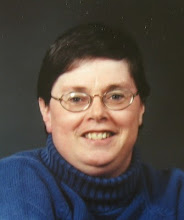
Kathleen Ernst, who writes historical fiction (including some of the American Girl books) and who used to do living history performances for a living, is hosting me on her blog:
http://sitesandstories.wordpress.com/2012/04/11/meet-meg-justus/
This one's about the Job Carr Cabin Museum and quilting in public [g].
Showing posts with label museums. Show all posts
Showing posts with label museums. Show all posts
Wednesday, April 11, 2012

Thursday, February 9, 2012
it occurred to me today
That a curator update might be called for, since I haven't written one in a while.
Some of the more unusual items I have cataloged recently in my textile cataloging gig:
1) A B-17 bomber pilot outfit, consisting of what made me think of nothing so much as a pair of ski bibs and jacket. Except, of course, for being made of leather lined with sheepskin and weighing what seemed like 500 pounds.
2) A pennant from the U.S.S. Arizona, dated 1924, commemorating a cruise to the Caribbean and through the Panama Canal.
3) An assortment of souvenir hankies from the Alaska-Yukon-Pacific Exposition in Seattle in 1909.
4) And today, a 1940 leather football helmet from the local high school, and the jersey that went with it -- both obviously well-worn and used. The blue paint? dye? was peeling and cracking on the helmet, and the jersey was, among other things, missing a chunk at the back hem I estimate at about 5x7 inches. Or a good handful [g].
I love this job.
Oh, and my other gig, the Lakewood Cityhood exhibit, will be opening in two weeks. I have been creating graphics all week (well, taking the templates I created earlier and filling in the photos and text), and I'm just about ready to go to the printer tomorrow. Hallelujah.
If you happen to be in Pierce County, Washington, on on Saturday, February 25th (or thereafter, until next February), come take a gander! It's at the Lakewood History Museum.
Some of the more unusual items I have cataloged recently in my textile cataloging gig:
1) A B-17 bomber pilot outfit, consisting of what made me think of nothing so much as a pair of ski bibs and jacket. Except, of course, for being made of leather lined with sheepskin and weighing what seemed like 500 pounds.
2) A pennant from the U.S.S. Arizona, dated 1924, commemorating a cruise to the Caribbean and through the Panama Canal.
3) An assortment of souvenir hankies from the Alaska-Yukon-Pacific Exposition in Seattle in 1909.
4) And today, a 1940 leather football helmet from the local high school, and the jersey that went with it -- both obviously well-worn and used. The blue paint? dye? was peeling and cracking on the helmet, and the jersey was, among other things, missing a chunk at the back hem I estimate at about 5x7 inches. Or a good handful [g].
I love this job.
Oh, and my other gig, the Lakewood Cityhood exhibit, will be opening in two weeks. I have been creating graphics all week (well, taking the templates I created earlier and filling in the photos and text), and I'm just about ready to go to the printer tomorrow. Hallelujah.
If you happen to be in Pierce County, Washington, on on Saturday, February 25th (or thereafter, until next February), come take a gander! It's at the Lakewood History Museum.
Tuesday, January 31, 2012
Montana museums
On my next stop on my blog tour, Velda Brotherton has hosted my article about visiting museums and archives in Montana and in Yellowstone while researching Repeating History.
I have to say that museums are one of the best idea founts on the planet. I hope you enjoy the article.
I have to say that museums are one of the best idea founts on the planet. I hope you enjoy the article.
Wednesday, September 21, 2011
On our way home again
Sunday morning we packed up and checked out of our lovely hotel room and went back to the con for one last morning of panels. Mine were mostly on self-publishing and how to market one's books. We met back at the car at one in the afternoon, then went to get lunch and do a little laundry and shopping (for things like ice for the cooler and milk) before we headed west out of Reno towards Lake Tahoe.
Lake Tahoe was gorgeous, but you'll just have to take my word for it. There wasn't really any place to stop and take photos, and the one place I'd counted on to stop and walk along the lakeshore was crowded with a street fair, so we couldn't even find a place to park. We drove on to somewhere I'd wanted to visit for a long time instead.
When I was a teenager, I had a rather morbid fascination with the Donner Party. I read enough books about that horrible incident in California's history to give myself nightmares. Even though that was thirty-five years ago, when I realized I was going to have the chance to stop by Donner Memorial State Park and visit its museum, well, I couldn't resist. Mary politely went along for the ride.
It was an interesting stop, I thought, even though the park was in the process of being renovated and there wasn't as much to see as I'd hoped. We did see the monument itself.
The museum was a bit antiquated (part of the renovation is that they're getting a new museum), but still interesting. Here's an example of one of the exhibits, a wagon like the one the Donners and company would have traveled in:
After we left the memorial, we headed west, first down I-80, then on U.S. 20. We stopped at a viewpoint on U.S. 20, out over the foothills of the Sierra Nevadas. We were back in the gold country.
We gradually made our way down into the Central Valley again, but since we were headed for the coast we did not head up I-5 when we crossed it. We spent the night in a little town called Williams, which was on I-5, though. And when I say little, I mean little. Three motels, a couple of gas stations, a few fast food places, and probably a grocery store somewhere. And that was it.
Lake Tahoe was gorgeous, but you'll just have to take my word for it. There wasn't really any place to stop and take photos, and the one place I'd counted on to stop and walk along the lakeshore was crowded with a street fair, so we couldn't even find a place to park. We drove on to somewhere I'd wanted to visit for a long time instead.
When I was a teenager, I had a rather morbid fascination with the Donner Party. I read enough books about that horrible incident in California's history to give myself nightmares. Even though that was thirty-five years ago, when I realized I was going to have the chance to stop by Donner Memorial State Park and visit its museum, well, I couldn't resist. Mary politely went along for the ride.
It was an interesting stop, I thought, even though the park was in the process of being renovated and there wasn't as much to see as I'd hoped. We did see the monument itself.
 |
| The base of the monument is how deep the snow got the winter the Donner Party was marooned here. |
 |
| Boy, am I glad I live here and now |
 |
| Beautiful, rolling countryside. It seemed as if we could see forever. |
 |
| We also saw some gilia at the viewpoint. We saw a lot of this particular flower on our trip. |
Friday, September 16, 2011
Mono Lake and on to Reno
The next morning, much refreshed after a clean shower and a good night's sleep, we stopped at Mono Lake before heading north to Reno.
Mono Lake has a very impressive visitor center,
We not only learned about the geology of the lake, but also about its natural history and human history. I must say that I'm very glad I wasn't an Indian in this area. They apparently lived on larvae harvested from the lake.
The lake itself is beautiful, in an extremely austere way.
We stopped at the Mono Basin Historical Museum, too, but unfortunately it was closed.
There was a rather odd-looking building in the yard, though,
After that we headed north from Lee Vining through the desert along the eastern edge of the Sierra Nevadas, through several tiny towns with gas prices that made me really glad I'd paid that $4.20-something in Yosemite. These prices were almost up to $5. As soon as we crossed the state line into Nevada, though, they dropped back to around $3.65. Politics does strange things to gas prices...
We arrived in Reno in time for a late lunch (just fast food), and then visited our first quilt shop of the trip. Both of us walked out with fabric, and I found a couple of patterns, too. Then we went to the strip and found the con hotel. It took a bit of maneuvering and figuring out how things worked, but we finally did, and found ourselves in the lap of luxury, for about $20 more a night than we'd paid for that tent cabin in Yosemite. We went to register for the World Science Fiction convention, held in Reno's convention center, which looked very retro-sixties but was air-conditioned, which was all that mattered at that point.
It was in the 90s and single-digit humidity the whole time we were in Reno. I've never felt so much like a potato chip in my life.
Mono Lake has a very impressive visitor center,
 |
| No, I don't know who those people are [g]. |
The lake itself is beautiful, in an extremely austere way.
 |
| From the patio behind the visitor center. The beige things in the water are tufa formations, which are a kind of rock that forms in water this full of chemicals. |
 |
| And another view. The lake is many times as chemically saturated as the Great Salt Lake. |
 |
| The building is an old schoolhouse. |
 |
| I've never seen an upside-down building before. |
We arrived in Reno in time for a late lunch (just fast food), and then visited our first quilt shop of the trip. Both of us walked out with fabric, and I found a couple of patterns, too. Then we went to the strip and found the con hotel. It took a bit of maneuvering and figuring out how things worked, but we finally did, and found ourselves in the lap of luxury, for about $20 more a night than we'd paid for that tent cabin in Yosemite. We went to register for the World Science Fiction convention, held in Reno's convention center, which looked very retro-sixties but was air-conditioned, which was all that mattered at that point.
It was in the 90s and single-digit humidity the whole time we were in Reno. I've never felt so much like a potato chip in my life.
Friday, July 15, 2011
Virtual Exhibits!
Today is the day that all that work cataloging photographs for the Tacoma Historical Society pays off.
Today, four virtual exhibits of historic photographs, one of postcards and photographs of early Tacoma schools, one of people, known and unknown, one of parks of Tacoma, and one of early Tacoma business and commerce, are available for public view on the Tacoma Historical Society's website.
Please go take a look, and tell me what you think!
Today, four virtual exhibits of historic photographs, one of postcards and photographs of early Tacoma schools, one of people, known and unknown, one of parks of Tacoma, and one of early Tacoma business and commerce, are available for public view on the Tacoma Historical Society's website.
Please go take a look, and tell me what you think!
Wednesday, June 8, 2011
it's been a long time
Too long, I'm afraid. I'm about to finish my second gig (the photo curation for the Tacoma Historical Society). I have finished curating and cataloging over 2200 images, ranging from glass negatives to prints from digital images, and am now in the process of building virtual exhibits, collections of photographs with informative captions, which will be placed online as part of the Society's website. I will post the link as soon as it becomes available. The first two virtual exhibits will be about early Tacoma schools and historic personages of Tacoma, respectively.
I have started a third, curating textiles, beginning with a collection of wedding gowns running the gamut from late 19th century to almost modern, for the Fife Historical Society. And I am in discussions with yet another local historical society for the creation of another exhibit this fall. So the freelance museum curator business seems to be keeping me in cotton gloves and acid-free tissue, at any rate.
Today I had the wonderful opportunity to go behind the scenes at the Washington State Historical Society research center, where I attended a workshop about curating baskets and other textiles. The first part of the workshop was standard lecture/question and answer (and very informative), but the second part was touring several of the textile storage rooms, including one that housed over 1500 Northwest-made Indian baskets, many of which were over 100 years old. I wish I'd brought my camera. The baskets ran the gamut from thimble-sized to one I could almost have sat in, and included materials from bark to reed to beads. I think my personal favorites were the one woven to look just like a china cup and saucer, and the collection of thimble-sized baskets. I felt about those the way I do about miniature quilts at quilt shows. Wow, that's impressive. Man, they must have been insane...
One other piece of unrelated news: I am in the process of editing, creating cover art, and formatting my historical with a whiff of fantasy novel for the Kindle and Smashwords. I hope to have it up and for sale by the end of July, and I will announce it here (and everywhere else I can think of) as soon as it becomes available.
And I'll try not to disappear into the ether on you again any time soon, too.
I have started a third, curating textiles, beginning with a collection of wedding gowns running the gamut from late 19th century to almost modern, for the Fife Historical Society. And I am in discussions with yet another local historical society for the creation of another exhibit this fall. So the freelance museum curator business seems to be keeping me in cotton gloves and acid-free tissue, at any rate.
Today I had the wonderful opportunity to go behind the scenes at the Washington State Historical Society research center, where I attended a workshop about curating baskets and other textiles. The first part of the workshop was standard lecture/question and answer (and very informative), but the second part was touring several of the textile storage rooms, including one that housed over 1500 Northwest-made Indian baskets, many of which were over 100 years old. I wish I'd brought my camera. The baskets ran the gamut from thimble-sized to one I could almost have sat in, and included materials from bark to reed to beads. I think my personal favorites were the one woven to look just like a china cup and saucer, and the collection of thimble-sized baskets. I felt about those the way I do about miniature quilts at quilt shows. Wow, that's impressive. Man, they must have been insane...
One other piece of unrelated news: I am in the process of editing, creating cover art, and formatting my historical with a whiff of fantasy novel for the Kindle and Smashwords. I hope to have it up and for sale by the end of July, and I will announce it here (and everywhere else I can think of) as soon as it becomes available.
And I'll try not to disappear into the ether on you again any time soon, too.
Wednesday, March 16, 2011
a finished exhibit
Today I finished installing my first exhibit for pay, Clover Park: How a school district helped build a community, for the Lakewood History Museum. The grand opening, complete with ribbon cutting, will take place on Saturday, March 19th, at 1 pm. The museum itself will be open from noon to six that day (the regular hours are 12-4, Wed.-Sat.). If you will be in the Tacoma, Washington, area, on that day, we would be very happy to have you drop in!
If you can't, well, here are some photos I took this afternoon after I wiped the last fingerprints off of the display case covers [g]:
This is a small sample of what's in the exhibit. In case you're wondering about the colors, Clover Park High School's colors are kelly green and gold, and Lakes High School's colors are royal blue and orange. They don't look bad together, do they?
If you can't, well, here are some photos I took this afternoon after I wiped the last fingerprints off of the display case covers [g]:
 |
| The introductory panel. The graphic design, four large panels, and templates for the smaller panels were created by the inventive Chris Erlich. I couldn't be more pleased with them. |
 |
| The first display case. The 1960-vintage Hudtloff Junior High School beanie is fun. I mounted it on a styrofoam ball covered in polyethylene fleece. |
 |
| One of the photo panel walls, including a timeline. |
 |
| More photos, two small text panels, the acknowledgements panel, and another timeline panel. Lakes High School has national award-winning choirs, as illustrated at the top of this photo. The top left panel is about extremely recent history, since the Clover Park Warriors won the Washington state 2A basketball state title, and the Lakes Lancers won the Washington state 3A state basketball title, all in the same week last week. |
 |
| The other display case, including a 1940-vintage high school diploma (Clover Park High School's first graduating class), and two annuals, a 1940 Clover Park Klahowya, and a 1964 Lakes High School Legend (Lakes' first graduating class). |
Saturday, February 26, 2011
Have you ever swung a wall around?
When I was a teenager, the year after my three sisters got married (yes, in the same year -- 1971, the year I turned twelve), my mother decided that it would be nice if the newly-vacated two smallest bedrooms in our house could be turned into one. On one side of the wall between the two rooms was a large built-in bookcase. So she asked my father (who could do just about anything) if he couldn't just swing that wall around so that the bookcase would be on the wall between the two doors.
My father, as I remember, gave her a pained look and gently told her, it doesn't quite work that way. Then he took the bookcase down, tore the wall out, rewired the ceiling lights so both would come on no matter which switch you hit, filled the gaps in the walls and ceiling with drywall, scraped asphalt tile off the floor of one bedroom and removed carpet from the other, sanded the floor till it was even, painted the walls and ceiling, laid down new carpet, and reinstalled the bookcase on the wall between the two doors. It took him about six months, if I remember correctly.
Today I helped swing several walls. Granted, they are temporary, made out of hinged-together hollow core doors, but if a device to separate one large room into several small ones can be called a wall, these are walls.
They were at the Lakewood History Museum, where my exhibit, "Clover Park, how a school district helped create a community," will open three weeks from today. It's coming down to the wire. The photos are selected, the text has been written, the text and photos for the four large panels have been sent to the fabricator, I have received the templates for the small text and the photo panels from her, and I have begun to create the smaller panels to put on a flash drive to take to the printer. Next week we will have a mounting party, myself and several volunteers, to mount all the panels onto foam core board, and I will also fill the two cases with artifacts. Week after next we will hang all the panels and I will add the case labels to the display cases. We will have our grand opening on Saturday March 19th. If you happen to be in the Tacoma, Washington, area on that day, the museum will be open from 12 noon to 5 pm, the ribbon cutting will be at 1 pm, and I would be extremely pleased to see you there.
I've been working on this project since the beginning of last November. Not quite six months -- it'll be about four and a half by the time the exhibit opens. I've interviewed about twenty people (including the 100-year-old daughter of the woman who pretty much founded the school district singlehandedly -- sadly, she died last week, so this exhibit will be in her memory), collected photographs and artifacts from everywhere and everyone I could think of plus a few more, scanned dozens of the former, visited archives both here and out of town, assembled more information and facts about the Clover Park School District than I ever knew existed, and written a story in words, pictures, and objects that was far more interesting to create than I ever expected. I hope it will be as interesting for the people who experience it.
I'm almost there. I'm -- figuratively speaking -- painting walls and laying carpet.
But today I actually did swing a few walls around. Literally. My father would have been jealous.
My father, as I remember, gave her a pained look and gently told her, it doesn't quite work that way. Then he took the bookcase down, tore the wall out, rewired the ceiling lights so both would come on no matter which switch you hit, filled the gaps in the walls and ceiling with drywall, scraped asphalt tile off the floor of one bedroom and removed carpet from the other, sanded the floor till it was even, painted the walls and ceiling, laid down new carpet, and reinstalled the bookcase on the wall between the two doors. It took him about six months, if I remember correctly.
Today I helped swing several walls. Granted, they are temporary, made out of hinged-together hollow core doors, but if a device to separate one large room into several small ones can be called a wall, these are walls.
They were at the Lakewood History Museum, where my exhibit, "Clover Park, how a school district helped create a community," will open three weeks from today. It's coming down to the wire. The photos are selected, the text has been written, the text and photos for the four large panels have been sent to the fabricator, I have received the templates for the small text and the photo panels from her, and I have begun to create the smaller panels to put on a flash drive to take to the printer. Next week we will have a mounting party, myself and several volunteers, to mount all the panels onto foam core board, and I will also fill the two cases with artifacts. Week after next we will hang all the panels and I will add the case labels to the display cases. We will have our grand opening on Saturday March 19th. If you happen to be in the Tacoma, Washington, area on that day, the museum will be open from 12 noon to 5 pm, the ribbon cutting will be at 1 pm, and I would be extremely pleased to see you there.
I've been working on this project since the beginning of last November. Not quite six months -- it'll be about four and a half by the time the exhibit opens. I've interviewed about twenty people (including the 100-year-old daughter of the woman who pretty much founded the school district singlehandedly -- sadly, she died last week, so this exhibit will be in her memory), collected photographs and artifacts from everywhere and everyone I could think of plus a few more, scanned dozens of the former, visited archives both here and out of town, assembled more information and facts about the Clover Park School District than I ever knew existed, and written a story in words, pictures, and objects that was far more interesting to create than I ever expected. I hope it will be as interesting for the people who experience it.
I'm almost there. I'm -- figuratively speaking -- painting walls and laying carpet.
But today I actually did swing a few walls around. Literally. My father would have been jealous.
Saturday, January 15, 2011
so much
For my new year's goal to get my blogging back up to speed again.
I thought I was coming down to crunch time on the exhibit project, but due to circumstances which are due to someone else's deadlines, it looks like the exhibit is not going to open until March (it was originally scheduled to open in mid-February, then the end of February). I'm ambivalent about this. I'm about to the point where I want to get it finished, but then again, two to four more weeks of a chance to improve on what I've already got done is nothing to sneeze at, either.
The photo curation project has acquired several volunteers. My good friend L donated a few hours of her time, and one of the members of the collections committee (except for me, this is an all-volunteer organization) has been giving me about six hours a week of his time, too. Then there's the college student whose school requires her to do a certain amount of volunteer work between semesters. So I have her for about fifteen hours a week for the next couple of weeks. All of a sudden the work is going much faster than it had been. Having someone to a) label photos and their sleeves before I catalog them on the computer, and b) scan the photos after I've done the cataloging, has really sped up the process. Quite amazing.
I've never been on the "working with volunteers" end of the spectrum as opposed to "being one of the volunteers" before. Anyone have any good advice on the subject?
I thought I was coming down to crunch time on the exhibit project, but due to circumstances which are due to someone else's deadlines, it looks like the exhibit is not going to open until March (it was originally scheduled to open in mid-February, then the end of February). I'm ambivalent about this. I'm about to the point where I want to get it finished, but then again, two to four more weeks of a chance to improve on what I've already got done is nothing to sneeze at, either.
The photo curation project has acquired several volunteers. My good friend L donated a few hours of her time, and one of the members of the collections committee (except for me, this is an all-volunteer organization) has been giving me about six hours a week of his time, too. Then there's the college student whose school requires her to do a certain amount of volunteer work between semesters. So I have her for about fifteen hours a week for the next couple of weeks. All of a sudden the work is going much faster than it had been. Having someone to a) label photos and their sleeves before I catalog them on the computer, and b) scan the photos after I've done the cataloging, has really sped up the process. Quite amazing.
I've never been on the "working with volunteers" end of the spectrum as opposed to "being one of the volunteers" before. Anyone have any good advice on the subject?
Saturday, January 1, 2011
Being a bad correspondent.
One year ago today I started this blog.
It's sort of ironic that the reason I haven't posted much since I finished my Long Trip posts is because my museum work is going so well, and I've been incredibly busy during the month of December. I am going to try to write more often in future in spite of it, because what I've been doing is so interesting. At least it is to me, and I hope it will be to you.
For instance. This week I just finished cataloging and properly storing two collections of about 100 glass plate negatives for the Tacoma Historical Society. They're over 100 years old, but the images are still clear and sharp, which is amazing to me. The subjects ranged from scenes of Old Tacoma to turn-of-the-last-century hiking trips to Mt. Rainier. Miners and sawmills and steam locomotives, too.
The second, as yet incomplete, volume of what I hope will someday become my Yellowstone trilogy features a photographer during the 1890s Yukon gold rush. He's based on a real man named Eric Hegg (the University of Washington has a large collection of his photographs here), who hauled crates of fragile glass plates over the Chilkoot Pass and down the Yukon River to Dawson City and on to Nome, Alaska. Handling the Society's collection of glass negatives really brought home what that would have been like. I am shocked, honestly, that any of them survived intact.
Now it's on to the much less fragile paper photos. I can't say I'm not glad.
For my other project, at the Lakewood Historical Society, I interviewed the almost 100-year-old daughter of the woman who was the driving force behind the creation of the Clover Park School District in Lakewood, Washington, for the exhibit I'm building on its history. She's amazing. I hope I keep my brains and memory as intact as she has when I'm 3/4 of her age. I've discovered, too, that, in spite of my preconceptions (having moved 26 times in my lifetime, 14 times long distance), many people do still live in the same place (and sometimes the same house) all their lives.
I also interviewed the former superintendent of the district in the 1950s, and a 1951 Clover Park High graduate, who very graciously lent the museum his letterman's sweater and hockey skates for the exhibit, and a 1960 graduate, who donated her junior high school banner and beanie and high school dance cards to the museum. And visited the state archives, and the school district archives.
Did I mention that I love research? And who'd have thought that the history of a school district would be so interesting?
Lucky, lucky me. I've never had work that has made me as happy as this work has.
Do you love your work? Have you ever been in a position where you look forward to your work every day?
It's sort of ironic that the reason I haven't posted much since I finished my Long Trip posts is because my museum work is going so well, and I've been incredibly busy during the month of December. I am going to try to write more often in future in spite of it, because what I've been doing is so interesting. At least it is to me, and I hope it will be to you.
For instance. This week I just finished cataloging and properly storing two collections of about 100 glass plate negatives for the Tacoma Historical Society. They're over 100 years old, but the images are still clear and sharp, which is amazing to me. The subjects ranged from scenes of Old Tacoma to turn-of-the-last-century hiking trips to Mt. Rainier. Miners and sawmills and steam locomotives, too.
The second, as yet incomplete, volume of what I hope will someday become my Yellowstone trilogy features a photographer during the 1890s Yukon gold rush. He's based on a real man named Eric Hegg (the University of Washington has a large collection of his photographs here), who hauled crates of fragile glass plates over the Chilkoot Pass and down the Yukon River to Dawson City and on to Nome, Alaska. Handling the Society's collection of glass negatives really brought home what that would have been like. I am shocked, honestly, that any of them survived intact.
Now it's on to the much less fragile paper photos. I can't say I'm not glad.
For my other project, at the Lakewood Historical Society, I interviewed the almost 100-year-old daughter of the woman who was the driving force behind the creation of the Clover Park School District in Lakewood, Washington, for the exhibit I'm building on its history. She's amazing. I hope I keep my brains and memory as intact as she has when I'm 3/4 of her age. I've discovered, too, that, in spite of my preconceptions (having moved 26 times in my lifetime, 14 times long distance), many people do still live in the same place (and sometimes the same house) all their lives.
I also interviewed the former superintendent of the district in the 1950s, and a 1951 Clover Park High graduate, who very graciously lent the museum his letterman's sweater and hockey skates for the exhibit, and a 1960 graduate, who donated her junior high school banner and beanie and high school dance cards to the museum. And visited the state archives, and the school district archives.
Did I mention that I love research? And who'd have thought that the history of a school district would be so interesting?
Lucky, lucky me. I've never had work that has made me as happy as this work has.
Do you love your work? Have you ever been in a position where you look forward to your work every day?
Sunday, December 12, 2010
Pineapple Express and NaNoWriMo
First off, it's been raining steadily since Saturday morning (it's now Sunday night). Yes, I live near Seattle, and, yes, the rest of the world thinks this is normal for us. Some people even seem to think that this is normal for us year-round -- never mind that we average less than an inch of rain for July, August, and September.
But this is a bit more than normal -- this is a Pineapple Express. If you look at the satellite pictures you'll see that the stream of moisture aimed at the Pacific Northwest like a firehose comes from the tropical Pacific Ocean, basically Hawaii. Hence the moniker Pineapple Express. Our high today was in the mid-fifties Fahrenheit, about ten degrees above normal. The snow level was pushed up to 8000 feet (normally this time of year it ranges from sea level to about four thousand feet). This sort of thing happens maybe once or twice a year. And we're all prepared for floods (at sea level) and avalanches (in the mountains -- what happens when inches of rain saturate a snowpack).
There are two choices about where to live in this part of the world -- on a floodplain or on an ancient glacial moraine. You can float away, or you can dig rocks out of your garden every year. I'll take the rocks, thanks...
Anyway. NaNoWriMo was an interesting experience. I had never done it before, never really seen the need for it. But I'd had this idea in the back of my brain percolating ever since this dream I'd had a couple of months ago, about a highway patrolman chasing a little old lady speeding in an extremely old vehicle out in the middle of nowhere, when he rounds a corner and -- well, let's just say that the ghost town that should have been there wasn't a ghost town anymore.
The original dream took place in the Superstition Mountains in Arizona. When I decided to write it as a novel, I changed the location because I wanted to set it somewhere where I could actually go see the landscape, a trip to Arizona not being in the cards this year. So, the last weekend in October, I took an overnight trip to the Okanogan Country of north central Washington, and explored around and found an old gold mining country, a number of ghost towns, and stories (and places) that dovetailed so cleanly into the story that was percolating in my mind that I finally decided my sleeping mind must have just gotten confused.
Item the first:


Have you ever seen such beautiful isolation? The whole Okanogan Highlands looks like this. Interspersed with:


And then there was the town of Conconully. Which has got to be one of the most fabulous names I can think of, even if, since it's not exactly a ghost town (it has a population of a couple hundred these days), I'm going to have to rename it in the rewrites:


But this is a bit more than normal -- this is a Pineapple Express. If you look at the satellite pictures you'll see that the stream of moisture aimed at the Pacific Northwest like a firehose comes from the tropical Pacific Ocean, basically Hawaii. Hence the moniker Pineapple Express. Our high today was in the mid-fifties Fahrenheit, about ten degrees above normal. The snow level was pushed up to 8000 feet (normally this time of year it ranges from sea level to about four thousand feet). This sort of thing happens maybe once or twice a year. And we're all prepared for floods (at sea level) and avalanches (in the mountains -- what happens when inches of rain saturate a snowpack).
There are two choices about where to live in this part of the world -- on a floodplain or on an ancient glacial moraine. You can float away, or you can dig rocks out of your garden every year. I'll take the rocks, thanks...
Anyway. NaNoWriMo was an interesting experience. I had never done it before, never really seen the need for it. But I'd had this idea in the back of my brain percolating ever since this dream I'd had a couple of months ago, about a highway patrolman chasing a little old lady speeding in an extremely old vehicle out in the middle of nowhere, when he rounds a corner and -- well, let's just say that the ghost town that should have been there wasn't a ghost town anymore.
The original dream took place in the Superstition Mountains in Arizona. When I decided to write it as a novel, I changed the location because I wanted to set it somewhere where I could actually go see the landscape, a trip to Arizona not being in the cards this year. So, the last weekend in October, I took an overnight trip to the Okanogan Country of north central Washington, and explored around and found an old gold mining country, a number of ghost towns, and stories (and places) that dovetailed so cleanly into the story that was percolating in my mind that I finally decided my sleeping mind must have just gotten confused.
Item the first:

Road to Conconully

Road to Molson

Golden larches
Which turned out to be something of a story point in themselves -- larches are a highly unusual species. They're deciduous conifers, and they turn into flaming torches in the fall.
Then there was the ghost town/outdoor museum in Molson (yes, it was named after the Canadian beer -- the Molson family helped bankroll the beginning of the town):

I suspect it's a bit more lively in the summertime, but in late October it was delightfully desolate.
And this pig, who lives in a Molson storefront and became another important bit of business:

Doesn't he make you wonder what the heck?
And then there was the town of Conconully. Which has got to be one of the most fabulous names I can think of, even if, since it's not exactly a ghost town (it has a population of a couple hundred these days), I'm going to have to rename it in the rewrites:

Post office road, Conconully

The town that gave my story a history.
So that's the setting of Sojourn, which is about a young man who'd been uprooted from everything that mattered to him long before he found where he really belonged.
And what I wrote for NaNoWriMo this year.
Thursday, December 2, 2010
I am sorry
That I vanished for two weeks. November was three months crammed into one for me, and real life took over. To begin with, my first freelance museum gig -- I am researching, writing, and designing an exhibit for the Lakewood Historical Society -- swung into high gear. Secondly, my second freelance museum gig (they're both part-time, adding up to 30 hours a week total) -- I am cataloging the photograph collection for the Tacoma Historical Society -- began in earnest. And thirdly, I picked this year to do the National Novel Writing Month challenge. I finished blogging my Long Trip, too. Three months crammed into one, indeed.
Oh, and we had two windstorms and a snowstorm this month.

The Lakewood job is researching and designing an exhibit, my first one for pay (I created a small exhibit as a volunteer project last summer). It will recount the history of the Clover Park School District, which was and is a very large part of the identity of the community that finally incorporated as the city of Lakewood in the 1990s. Clover Park is both a microcosm of how school districts were formed and grew in Washington state during the 20th century, and a unique-to-Washington example of how the extremely strong military presence in Pierce County could and did change and form how a school district develops, including the creation of a technical college begun to train soldiers during WWII that only moved from the school district to the community college system fifteen years ago. It's been much more interesting research than I expected it to be.
The Tacoma job is helping bring order out of chaos, by cataloging the hundreds (perhaps over a thousand, I don't know yet) of historic photographs the Society has collected in its 20 years of existence. Everything from 19th century glass plate negatives to digital images. Through a grant, they were able to purchase PastPerfect, a museum cataloging software program, storage and preservation supplies, and my time for twenty hours a week for seven months. This week I have set up PastPerfect, transferred what collection files they already possessed from Excel to the new software, and started cataloging, beginning with a collection of antique postcards of local scenes from the turn of the last century. Some of which have writing on the back. Talk about social history...
And then there was NaNoWriMo. I think I'll wait and talk about that one next time. Suffice to say for now that 50,000 words in thirty days is a faster breakneck speed than I've ever written at before, but I did it. Which is pretty darned cool, in my humble opinion.

Oh, and we had two windstorms and a snowstorm this month.

This was the view out my front door the Monday before Thanksgiving
The Lakewood job is researching and designing an exhibit, my first one for pay (I created a small exhibit as a volunteer project last summer). It will recount the history of the Clover Park School District, which was and is a very large part of the identity of the community that finally incorporated as the city of Lakewood in the 1990s. Clover Park is both a microcosm of how school districts were formed and grew in Washington state during the 20th century, and a unique-to-Washington example of how the extremely strong military presence in Pierce County could and did change and form how a school district develops, including the creation of a technical college begun to train soldiers during WWII that only moved from the school district to the community college system fifteen years ago. It's been much more interesting research than I expected it to be.
The Tacoma job is helping bring order out of chaos, by cataloging the hundreds (perhaps over a thousand, I don't know yet) of historic photographs the Society has collected in its 20 years of existence. Everything from 19th century glass plate negatives to digital images. Through a grant, they were able to purchase PastPerfect, a museum cataloging software program, storage and preservation supplies, and my time for twenty hours a week for seven months. This week I have set up PastPerfect, transferred what collection files they already possessed from Excel to the new software, and started cataloging, beginning with a collection of antique postcards of local scenes from the turn of the last century. Some of which have writing on the back. Talk about social history...
And then there was NaNoWriMo. I think I'll wait and talk about that one next time. Suffice to say for now that 50,000 words in thirty days is a faster breakneck speed than I've ever written at before, but I did it. Which is pretty darned cool, in my humble opinion.
Wednesday, November 17, 2010
11 years ago today, Day 79
This is going to be the hardest post of the trip to write, especially as I don't particularly want to shortchange what was mostly another lovely day on my Long Trip. So bear with me, please.
Anyway. I spent most of the morning exploring more of Death Valley. First I drove up to Scotty's Castle, an extremely absurd place up on a hillside overlooking the valley:


I'll let you read the link for yourself, but suffice to say that the living history tour (given by a docent who pretended it was 1939 during the house's heyday) was fascinating.

After that I headed back to Stovepipe Wells where I bought, among other things, a small pottery jug as a souvenir, and ate lunch. Then I headed west, out of the park and over the Panamint Mountains to U.S. 395, the highway that runs north-south east of the Sierra Nevada mountains. I needed to go south almost to the bottom of the Sierras before I could cross them, because most of the more northerly passes, here in late November, were closed for the winter (I suppose I could have gone north a hundred miles or so to I-80, which stays open all year in spite of the snow, but I don't remember why I didn't do that).

He was interesting to me because he was so different from a coyote I'd seen in Yellowstone a couple of months before. Longer legs, thinner fur, bigger ears, longer tail. Obviously the Yellowstone coyote was compact and furry because he needed to stay warm during the long, cold winters there, while this Death Valley coyote was lanky and less furry because he needed to stay cool in the desert heat. At any rate, I found the contrast interesting (and I still regret not being able to get a photo of that Yellowstone coyote to demonstrate it).
Outside the park, I turned south on US 395, a route my parents and I had traveled many times on our way from LA to Oregon and Idaho for summer vacations when I was a kid, and drove south through the desert for an hour or so:

I was headed for the town of Ridgecrest, which is about the only community of any size in that neck of the desert. I had just turned east on CA 178 when I glanced at my map, as I had hundreds of times before, for over 14,000 miles in fact, to see how much farther I had to go.
It didn't turn out the way it had hundreds of times before. Apparently I bumped the steering wheel by accident, because the next thing I knew the car was on the shoulder of the road about to plow headfirst into the sand. I panicked, waythehell over compensated, and, well...
I came to hanging upside down from my seatbelt. I let myself out of it and, carefully avoiding a number of sharp, pointy things, managed to get myself upright. I shoved on the door. It wouldn't move. I reached up to the steering wheel and honked the horn. It worked.
A few minutes later, I heard scrabbling noises outside the car, and a couple of minutes after that, the door opened. I crawled out and stood up.
There were about a dozen people, half a dozen cars, and at least three cell phones. When I asked how they knew to find me, there was a chorus of "dust plume." A state trooper arrived a few moments later and took charge.
I and my car (which had to be loaded on a flatbed tow truck) were hauled to Ridgecrest, where Owl was taken to a towyard (after the trooper liberated some clothes and other belongings for me -- including my camera and binoculars, which were undamaged inside the armrest storage thing between the front seats) and I was taken to a motel, after declining a trip to the hospital since I had survived, so far as I could tell at the time, remarkably unscathed (I did develop some interesting bruises and a small sore spot on the top of my head by the next day, but that was it -- yes, I know how lucky I was).
I will be the first to admit I was in shock. My heart is pounding now even just thinking about it. I made phone calls, insurance and family and a rental car. "I walked two blocks to a little fast food joint called the Golden Ox and struggled to keep the tears back long enough to eat half a hamburger."
Oh, and I tried to run a load of laundry, only to have the washing machine at the motel die in the middle of the cycle, apparently from all the crud in my clothes. Bits of glass and rocks, mostly -- oh, and mud. If I may make one recommendation for anyone who travels with a cooler, it is to please empty the melted ice out every morning before you set out. Just in case.
Anyway. I didn't get much sleep that night. I spent quite some time on the phone with a friend back home, but I couldn't close my eyes. I kept seeing the accident, over and over and over.
And that was how I came to roll my car out in the middle of the Mojave Desert. As my brother-in-law told me a few days later, "You understand that this was a once-in-a-lifetime experience, don't you?"
Anyway. I spent most of the morning exploring more of Death Valley. First I drove up to Scotty's Castle, an extremely absurd place up on a hillside overlooking the valley:

The castle

The main entrance
After that, I drove up to Ubehebe Crater, a placename I never could find the origin of. It's a meteor crater, way up on the hillside, and it was very cold and windy up there, at least for someone wearing no more than shorts and a t-shirt:

From the edge
On my way out of the park I stopped to take a picture of a coyote:

He was interesting to me because he was so different from a coyote I'd seen in Yellowstone a couple of months before. Longer legs, thinner fur, bigger ears, longer tail. Obviously the Yellowstone coyote was compact and furry because he needed to stay warm during the long, cold winters there, while this Death Valley coyote was lanky and less furry because he needed to stay cool in the desert heat. At any rate, I found the contrast interesting (and I still regret not being able to get a photo of that Yellowstone coyote to demonstrate it).
Outside the park, I turned south on US 395, a route my parents and I had traveled many times on our way from LA to Oregon and Idaho for summer vacations when I was a kid, and drove south through the desert for an hour or so:

The Panamints from US 395
I was headed for the town of Ridgecrest, which is about the only community of any size in that neck of the desert. I had just turned east on CA 178 when I glanced at my map, as I had hundreds of times before, for over 14,000 miles in fact, to see how much farther I had to go.
It didn't turn out the way it had hundreds of times before. Apparently I bumped the steering wheel by accident, because the next thing I knew the car was on the shoulder of the road about to plow headfirst into the sand. I panicked, waythehell over compensated, and, well...
I came to hanging upside down from my seatbelt. I let myself out of it and, carefully avoiding a number of sharp, pointy things, managed to get myself upright. I shoved on the door. It wouldn't move. I reached up to the steering wheel and honked the horn. It worked.
A few minutes later, I heard scrabbling noises outside the car, and a couple of minutes after that, the door opened. I crawled out and stood up.
There were about a dozen people, half a dozen cars, and at least three cell phones. When I asked how they knew to find me, there was a chorus of "dust plume." A state trooper arrived a few moments later and took charge.
I and my car (which had to be loaded on a flatbed tow truck) were hauled to Ridgecrest, where Owl was taken to a towyard (after the trooper liberated some clothes and other belongings for me -- including my camera and binoculars, which were undamaged inside the armrest storage thing between the front seats) and I was taken to a motel, after declining a trip to the hospital since I had survived, so far as I could tell at the time, remarkably unscathed (I did develop some interesting bruises and a small sore spot on the top of my head by the next day, but that was it -- yes, I know how lucky I was).
I will be the first to admit I was in shock. My heart is pounding now even just thinking about it. I made phone calls, insurance and family and a rental car. "I walked two blocks to a little fast food joint called the Golden Ox and struggled to keep the tears back long enough to eat half a hamburger."
Oh, and I tried to run a load of laundry, only to have the washing machine at the motel die in the middle of the cycle, apparently from all the crud in my clothes. Bits of glass and rocks, mostly -- oh, and mud. If I may make one recommendation for anyone who travels with a cooler, it is to please empty the melted ice out every morning before you set out. Just in case.
Anyway. I didn't get much sleep that night. I spent quite some time on the phone with a friend back home, but I couldn't close my eyes. I kept seeing the accident, over and over and over.
And that was how I came to roll my car out in the middle of the Mojave Desert. As my brother-in-law told me a few days later, "You understand that this was a once-in-a-lifetime experience, don't you?"
Tuesday, November 16, 2010
11 years ago today, Day 78
More desert. Actually, much more interesting desert, in my not so humble opinion. I got up and out fairly early, and headed west into Nevada, then north to the town of Searchlight, which has got to be one of the niftier place names I've ever run across. Along the way I took this picture of a rock formation that struck my fancy:

Before I reached Las Vegas, I turned west on I-15 for a few miles, then off on a two-lane highway, crossing into California and on to the town of Baker, where I attempted to grocery shop (Baker's supermarket was nothing to write home about -- I'd have shopped in Kingman, except that I was expecting to have to go through a California agricultural inspection station, which the road I crossed the border on did not have). Then I turned north, heading towards Death Valley National Park, and lost all my traffic, which was very nice.
My next stop was the hamlet of Shoshone, where I bought gas at what seemed to me at the time an appalling $1.70 a gallon (for my non-U.S. readers, yesterday I paid $2.99 a gallon, which is fairly normal this year, but I'd been averaging somewhere around $1.35 on my Long Trip). I thought about stopping for the night at the hostel there, but decided instead to call ahead and see if I could get a room at the Stovepipe Wells Inn in the park. Which I did, and could. So I ate lunch in a funky little restaurant which had one wall completely papered in foreign money, with notes written on the bills. "Turns out some Chinese fellows left a note for some friends there, and sort of started a tradition."
"After lunch, I drove up into the park over a 3300 foot pass, which doesn't sound like much until you realize that most of the park (well, the most important part) is below sea level, and down, down, down into the valley."

" I stopped at the place with the lowest elevation in the western hemisphere, 282 feet below sea level."


"I drove through multicolored bluffs on a narrow one-lane road."


"I stopped at the visitor center at Furnace Creek, where the temperature was in the 80sF, and saw their exhibits and picked up a guidebook. I walked a short trail out to an old borax works (still haven't figured out what makes borax so valuable)." And then I came on up to Stovepipe Wells and settled in.
The last time I was in Death Valley I was about seven or eight, I think. My parents and I drove up there from LA for a long weekend in February one year. I have two really strong memories of the place. One was of my dad pulling over at a rock formation called The Devil's Golf Course (they're big on Satanic names here), my mother opening her car door, putting a foot out, and yanking it right back in. Turns out there was a rather large tarantula waiting to show her around.
My other memory is of getting rained on. Yes, in Death Valley, where the average annual rainfall is less than 2", we got rained on. It wasn't enough to do more than stir the dust on the car, but still. How many people can say they were rained on in Death Valley?
I sat out at a picnic table to eat my supper while darkness fell around me. The stars were spectacular that night. It's too bad I couldn't get any decent photos of them.
But I was awfully glad my motel room was air conditioned. Even if it was the middle of November.

Before I reached Las Vegas, I turned west on I-15 for a few miles, then off on a two-lane highway, crossing into California and on to the town of Baker, where I attempted to grocery shop (Baker's supermarket was nothing to write home about -- I'd have shopped in Kingman, except that I was expecting to have to go through a California agricultural inspection station, which the road I crossed the border on did not have). Then I turned north, heading towards Death Valley National Park, and lost all my traffic, which was very nice.
My next stop was the hamlet of Shoshone, where I bought gas at what seemed to me at the time an appalling $1.70 a gallon (for my non-U.S. readers, yesterday I paid $2.99 a gallon, which is fairly normal this year, but I'd been averaging somewhere around $1.35 on my Long Trip). I thought about stopping for the night at the hostel there, but decided instead to call ahead and see if I could get a room at the Stovepipe Wells Inn in the park. Which I did, and could. So I ate lunch in a funky little restaurant which had one wall completely papered in foreign money, with notes written on the bills. "Turns out some Chinese fellows left a note for some friends there, and sort of started a tradition."
"After lunch, I drove up into the park over a 3300 foot pass, which doesn't sound like much until you realize that most of the park (well, the most important part) is below sea level, and down, down, down into the valley."

" I stopped at the place with the lowest elevation in the western hemisphere, 282 feet below sea level."

The sign says "Badwater" and the elevation. And I'm not arguing about the description.

See that white dot a bit more than halfway up the hillside? That's sea level.
"I drove through multicolored bluffs on a narrow one-lane road."


The sign says "Artist's Palette," and tells about the minerals that create the colors
"I stopped at the visitor center at Furnace Creek, where the temperature was in the 80sF, and saw their exhibits and picked up a guidebook. I walked a short trail out to an old borax works (still haven't figured out what makes borax so valuable)." And then I came on up to Stovepipe Wells and settled in.
The last time I was in Death Valley I was about seven or eight, I think. My parents and I drove up there from LA for a long weekend in February one year. I have two really strong memories of the place. One was of my dad pulling over at a rock formation called The Devil's Golf Course (they're big on Satanic names here), my mother opening her car door, putting a foot out, and yanking it right back in. Turns out there was a rather large tarantula waiting to show her around.
My other memory is of getting rained on. Yes, in Death Valley, where the average annual rainfall is less than 2", we got rained on. It wasn't enough to do more than stir the dust on the car, but still. How many people can say they were rained on in Death Valley?
I sat out at a picnic table to eat my supper while darkness fell around me. The stars were spectacular that night. It's too bad I couldn't get any decent photos of them.
But I was awfully glad my motel room was air conditioned. Even if it was the middle of November.
Monday, November 15, 2010
11 years ago today, Day 77
I made a rather late start eleven years ago today, after discovering that my milk had leaked into the melted ice in my cooler, and, worse, vice versa. That was pretty much the most horrid-tasting milk I've ever tasted, which is saying quite a bit.
I spent the morning at the Heard Museum in Phoenix. I was less than impressed by it, "mostly because I was expecting a museum of Southwest Native American history, and what I got was Southwest Native American art. Which is all fine and dandy, but I'm not real enamored of art museums. They did have a room full of kachina dolls, which was excellent, and a couple of examples of their housing (a hogan and an Apache brush shelter) and a few exhibits on the different tribes, but most of it was art."
I will be the first to admit that I'm not a big fan of art museums for their own sake. If I'm interested in the period and place the art was created, or if I'm interested in the people who created it or are depicted in it, then I last longer. But as it was I only spent about an hour and a half there.
"Since it wasn't even noon yet, I decided to go on to Kingman, in the northwest corner of Arizona. The road leading out of Phoenix took forever, stoplight after stoplight after stoplight, but I finally got back out to the desert. ... I headed northwest, out across a vast plain of Joshua trees." I hate to say this, but "they are so ugly. They're all contorted, as if they're in pain, and they don't have enough foliage on them for a self-respecting carrot, let alone a twelve-foot tree. Can you tell I'm getting tired of the desert?"
I arrived in Kingman fairly late in the afternoon. "Kingman's a funny town. It grew up along Route 66, the famous old highway that used to run from Chicago to LA, and that's still its claim to fame (one of the few parts of of the route not buried under I-40 is on either side of Kingman). I stayed in the Route 66 Motel, next to the Route 66 Gift Shop. It was kind of cool, in a kitschy sort of way."
And Kingman did provide me with one of the more glorious sunsets of the trip:

I spent the morning at the Heard Museum in Phoenix. I was less than impressed by it, "mostly because I was expecting a museum of Southwest Native American history, and what I got was Southwest Native American art. Which is all fine and dandy, but I'm not real enamored of art museums. They did have a room full of kachina dolls, which was excellent, and a couple of examples of their housing (a hogan and an Apache brush shelter) and a few exhibits on the different tribes, but most of it was art."
I will be the first to admit that I'm not a big fan of art museums for their own sake. If I'm interested in the period and place the art was created, or if I'm interested in the people who created it or are depicted in it, then I last longer. But as it was I only spent about an hour and a half there.
"Since it wasn't even noon yet, I decided to go on to Kingman, in the northwest corner of Arizona. The road leading out of Phoenix took forever, stoplight after stoplight after stoplight, but I finally got back out to the desert. ... I headed northwest, out across a vast plain of Joshua trees." I hate to say this, but "they are so ugly. They're all contorted, as if they're in pain, and they don't have enough foliage on them for a self-respecting carrot, let alone a twelve-foot tree. Can you tell I'm getting tired of the desert?"
I arrived in Kingman fairly late in the afternoon. "Kingman's a funny town. It grew up along Route 66, the famous old highway that used to run from Chicago to LA, and that's still its claim to fame (one of the few parts of of the route not buried under I-40 is on either side of Kingman). I stayed in the Route 66 Motel, next to the Route 66 Gift Shop. It was kind of cool, in a kitschy sort of way."
And Kingman did provide me with one of the more glorious sunsets of the trip:

Sunset from the Route 66 Motel
Sunday, November 14, 2010
11 years ago yesterday, Day 75
Life got a bit out of hand yesterday -- I'm also doing NaNoWriMo this year, and starting up a new business, and well...
Anyway. Eleven years ago yesterday, I climbed into the car and headed west out of Silver City for forty miles, then when that highway turned north, I turned west again onto a smaller road. The warning signs were a bit off-putting, "steep mountain grades, sharp curves, no commercial traffic," but the road itself was much better than what I'd been driving on for the last two days. The worst was a couple of 15 mph switchbacks. "And it was very scenic -- ponderosa pines, junipers, golden cottonwoods, wide grassy fields. At one point it took me out on the end of this finger of land jutting out into a valley, then in gentle swooping curves down to it.

"I was, however, having a hard time enjoying it this morning. Something in the car (not the car itself) was rattling. It sounded like someone crumpling a piece of paper over and over and over again. It was about to drive me mad. I must have pulled over to the side of the road half a dozen times and rearranged where I thought it was coming from, but the problem with that, of course, is that the noise stops when the car does, so I didn't have a prayer of pinpointing it.
"The strangest things can drive you bonkers when you've been traveling alone for a long time. That sort of thing has been my bete noire off and on during this trip. Car noises. People snoring. People acting like idiots on the road or in hostels.
"Anyway, the rattle mysteriously vanished when I stopped for lunch in a little town amidst the cotton fields called Safford."
I arrived in Globe, Arizona, about 2:30 in the afternoon. I'd been having a craving for ice cream all day, so I hit a Dairy Queen for a butterscotch sundae, then went looking for a motel. It was a good thing I didn't put that off any later. There was a rodeo in town, and I got one of the very last rooms for the night.
When I asked the desk clerk what there was that was interesting to do, she told me about an archaeological site on the edge of town, so I went there. "Another group of Indians contemporary with the Anasazi except that these folks built pueblos rather than cliff dwellings." They were called the Saludo, and the site was called Besh ba Gowah:


After that I prowled the main street, bought some milk, and went back to my room to rest.
I think the heat was beginning to get to me. There's something just Wrong about 90dF+ temperatures in the middle of November.
Anyway. Eleven years ago yesterday, I climbed into the car and headed west out of Silver City for forty miles, then when that highway turned north, I turned west again onto a smaller road. The warning signs were a bit off-putting, "steep mountain grades, sharp curves, no commercial traffic," but the road itself was much better than what I'd been driving on for the last two days. The worst was a couple of 15 mph switchbacks. "And it was very scenic -- ponderosa pines, junipers, golden cottonwoods, wide grassy fields. At one point it took me out on the end of this finger of land jutting out into a valley, then in gentle swooping curves down to it.

A nice desert view
"I was, however, having a hard time enjoying it this morning. Something in the car (not the car itself) was rattling. It sounded like someone crumpling a piece of paper over and over and over again. It was about to drive me mad. I must have pulled over to the side of the road half a dozen times and rearranged where I thought it was coming from, but the problem with that, of course, is that the noise stops when the car does, so I didn't have a prayer of pinpointing it.
"The strangest things can drive you bonkers when you've been traveling alone for a long time. That sort of thing has been my bete noire off and on during this trip. Car noises. People snoring. People acting like idiots on the road or in hostels.
"Anyway, the rattle mysteriously vanished when I stopped for lunch in a little town amidst the cotton fields called Safford."
I arrived in Globe, Arizona, about 2:30 in the afternoon. I'd been having a craving for ice cream all day, so I hit a Dairy Queen for a butterscotch sundae, then went looking for a motel. It was a good thing I didn't put that off any later. There was a rodeo in town, and I got one of the very last rooms for the night.
When I asked the desk clerk what there was that was interesting to do, she told me about an archaeological site on the edge of town, so I went there. "Another group of Indians contemporary with the Anasazi except that these folks built pueblos rather than cliff dwellings." They were called the Saludo, and the site was called Besh ba Gowah:

A view of the site

One of the exhibits

A closeup of one of the reconstructed buildings
After that I prowled the main street, bought some milk, and went back to my room to rest.
I think the heat was beginning to get to me. There's something just Wrong about 90dF+ temperatures in the middle of November.
Wednesday, November 10, 2010
11 years ago today, Day 72
I got up way too early eleven years ago this morning, the indirect result of having forgotten to set my alarm clock to Mountain Time the night before. I'd set it in the first place because I wanted to get back to the Caverns in time for the 9 am ranger-led walk. So I had plenty of time, which was good considering that the ticket seller at the visitor center was having computer troubles which delayed things a bit.
The tour I took was through a part of the Caverns called the King's Palace and the Queen's Chamber. "It was beautiful, just like the rest of the cave, and awe-inspiring. It became especially awe-inspiring when, to show us what the cave is like in its natural state (sans electricity), the ranger turned off the lights. I've been on cave tours where they've done this before. It's disorienting in the extreme. Black enough to where your eyes never will adjust. Black enough to where you literally cannot see your hand an inch from your face. Black enough to be terrifying. I don't know what the total stranger next to me thought of me moving my arm enough to where it touched his, but I needed to, in a very atavistic way. I don't think I could handle it for more than the few minutes they were out (which seemed an eternity, by the way)."
After the tour I climbed gratefully back onto that incongruous elevator and, reluctantly, went on my way. On my way out of the park, I took some pictures of what the land above the caverns looks like:


My next stop was Guadalupe Mountains National Park, which, even though it isn't that far down the road from Carlsbad, is back in Texas even though I went southwest to reach it. Guadalupe Mountains is best known for the mountain named El Capitan:


Now, I don't know about you, but the first place I think of when someone mentions the name El Capitan is Yosemite. Here's a link to a photo of Yosemite's El Capitan. An entirely different place. But I think both are equally beautiful.
I stopped at the McKittrick Canyon Visitor Center and "walked their nature trail through the desert along a lovely arroyo with wonderful views," and read the signs about the native plants along the way. I was surprised to discover that there is a madrone that lives down there in the desert. I think of madrones as coastal trees here in the Pacific Northwest. After the trail I went through the museum, then ate lunch in the tent section of the campground as opposed to the picnic area, on the recommendation of the park ranger at the museum. "Good recommendation. They were the only shady tables for miles."
After I left Guadalupe Mountains, I headed west towards El Paso, which was pretty much a nothing drive all the way. "Desert, salt flats, a few mountains in the distance (the Guadalupes were the first mountains I'd seen since the Blue Ridge, though, so I'm not complaining)."
I arrived in El Paso about the middle of the afternoon, found the AAA office, picked up enough maps to last me home, which was not a welcome thought, and decided it was too early to stop for the night. So I crossed the state line back into New Mexico for the last time and drove forty miles on to Las Cruces.
The motel had Thanksgiving decorations in the lobby. It was extremely odd to see them when I was wearing shorts in the 80dF temperatures.
The tour I took was through a part of the Caverns called the King's Palace and the Queen's Chamber. "It was beautiful, just like the rest of the cave, and awe-inspiring. It became especially awe-inspiring when, to show us what the cave is like in its natural state (sans electricity), the ranger turned off the lights. I've been on cave tours where they've done this before. It's disorienting in the extreme. Black enough to where your eyes never will adjust. Black enough to where you literally cannot see your hand an inch from your face. Black enough to be terrifying. I don't know what the total stranger next to me thought of me moving my arm enough to where it touched his, but I needed to, in a very atavistic way. I don't think I could handle it for more than the few minutes they were out (which seemed an eternity, by the way)."
After the tour I climbed gratefully back onto that incongruous elevator and, reluctantly, went on my way. On my way out of the park, I took some pictures of what the land above the caverns looks like:


This one in particular shows what I meant when I said yesterday that the mountains just sort of appear out of nowhere

You can barely see the road winding up the canyon in this one
My next stop was Guadalupe Mountains National Park, which, even though it isn't that far down the road from Carlsbad, is back in Texas even though I went southwest to reach it. Guadalupe Mountains is best known for the mountain named El Capitan:

One view of El Capitan

And another
Now, I don't know about you, but the first place I think of when someone mentions the name El Capitan is Yosemite. Here's a link to a photo of Yosemite's El Capitan. An entirely different place. But I think both are equally beautiful.
I stopped at the McKittrick Canyon Visitor Center and "walked their nature trail through the desert along a lovely arroyo with wonderful views," and read the signs about the native plants along the way. I was surprised to discover that there is a madrone that lives down there in the desert. I think of madrones as coastal trees here in the Pacific Northwest. After the trail I went through the museum, then ate lunch in the tent section of the campground as opposed to the picnic area, on the recommendation of the park ranger at the museum. "Good recommendation. They were the only shady tables for miles."
After I left Guadalupe Mountains, I headed west towards El Paso, which was pretty much a nothing drive all the way. "Desert, salt flats, a few mountains in the distance (the Guadalupes were the first mountains I'd seen since the Blue Ridge, though, so I'm not complaining)."
I arrived in El Paso about the middle of the afternoon, found the AAA office, picked up enough maps to last me home, which was not a welcome thought, and decided it was too early to stop for the night. So I crossed the state line back into New Mexico for the last time and drove forty miles on to Las Cruces.
The motel had Thanksgiving decorations in the lobby. It was extremely odd to see them when I was wearing shorts in the 80dF temperatures.
Sunday, October 31, 2010
11 years ago today, Day 62
Eleven years ago today I woke up to rain. I also woke up with my head no longer hurting, for which I was very grateful.
Halloween at a battlefield. "Maybe not the best planning in the world..."
I headed north out of Baton Rouge along some pretty backroads, stopping at a fruit stand just before I crossed the Mississippi state line to get more satsumas, and up to Natchez, and the beginning of the Natchez Trace. The Trace follows the old route the Kaintucks (early Midwesterners) used to use to travel back north after floating goods down the Mississippi River to sell them. Then they'd sell their barges, buy a mule if there was enough money or walk if there wasn't, back up the Trace towards home. My trip on the Trace predates the writing of the Sharing Knife series of books by Lois McMaster Bujold, but her characters travel a path based on this part of American history. It was neat when I read the books to be able to picture it in my mind. The Trace is also the setting for several of Nevada Barr's Anna Pigeon mysteries.
"The Trace -- the modern version, anyway -- is a lot like a flat Blue Ridge Parkway. It's gently curved and landscaped, devoid of commercial enterprise, and very beautiful. I found myself wishing I could drive it all the way to Nashville, where it ends, especially after I found out that Meriwether Lewis's grave is on the Tennessee part of the trace. But I had promised Mother I'd be at her house [in east Texas] day after tomorrow, and I want to stop in Bastrop tomorrow." Bastrop is the small town in northern Louisiana where my parents both grew up, and I still have aunts and uncles and cousins there.
So I turned off the Trace at Vicksburg and went off to explore the battlefield in the rain:


"It was all very interesting. And I had a reaction similar, if more subdued in some ways (the weather was not conducive to getting out of the car much), reaction to the one I had in Gettysburg. Sounds under my hearing, things out of the corner of my eye. And something quite different. A feeling that my heart was clenched. Like a fist. Sorrow, or something. The site of a siege (and Vicksburg was a siege -- Grant and his troops made his name for fighting and stubbornness here over a period of weeks) has a very different feeling than the site of a short, pitched battle. Civilians were involved. The nature of the land is changed because there's time to build earthworks and fortifications. More time for memories to seep into the earth. Anyway. It was moving. And beautiful. And sad."
Also, without context I'd never have known this was the same war that was also fought in Gettysburg. As my mother once said after a visit to Gettysburg, "they didn't fight the same war we learned about." We, in her case, being Southerners, since she grew up in Louisiana. The text and subtext couldn't quite get their locations standardized out of them. Which is a good thing.
So was the sight of trick-or-treaters as I headed back to my motel in the rain.
Halloween at a battlefield. "Maybe not the best planning in the world..."
I headed north out of Baton Rouge along some pretty backroads, stopping at a fruit stand just before I crossed the Mississippi state line to get more satsumas, and up to Natchez, and the beginning of the Natchez Trace. The Trace follows the old route the Kaintucks (early Midwesterners) used to use to travel back north after floating goods down the Mississippi River to sell them. Then they'd sell their barges, buy a mule if there was enough money or walk if there wasn't, back up the Trace towards home. My trip on the Trace predates the writing of the Sharing Knife series of books by Lois McMaster Bujold, but her characters travel a path based on this part of American history. It was neat when I read the books to be able to picture it in my mind. The Trace is also the setting for several of Nevada Barr's Anna Pigeon mysteries.
"The Trace -- the modern version, anyway -- is a lot like a flat Blue Ridge Parkway. It's gently curved and landscaped, devoid of commercial enterprise, and very beautiful. I found myself wishing I could drive it all the way to Nashville, where it ends, especially after I found out that Meriwether Lewis's grave is on the Tennessee part of the trace. But I had promised Mother I'd be at her house [in east Texas] day after tomorrow, and I want to stop in Bastrop tomorrow." Bastrop is the small town in northern Louisiana where my parents both grew up, and I still have aunts and uncles and cousins there.
So I turned off the Trace at Vicksburg and went off to explore the battlefield in the rain:

Monuments abounded, of course

Siege earthworks, or what's left of them

Grant's headquarters, if I remember correctly

Cannons on a ridgetop

Another monument
The detail on some of these monuments is incredibly realistic -- look at his trousers

Statue of Grant on horseback

More siegeworks with cannon and view off into the distance

A Union gunboat that had been pulled out of the Mississippi River within the last few years
"It was all very interesting. And I had a reaction similar, if more subdued in some ways (the weather was not conducive to getting out of the car much), reaction to the one I had in Gettysburg. Sounds under my hearing, things out of the corner of my eye. And something quite different. A feeling that my heart was clenched. Like a fist. Sorrow, or something. The site of a siege (and Vicksburg was a siege -- Grant and his troops made his name for fighting and stubbornness here over a period of weeks) has a very different feeling than the site of a short, pitched battle. Civilians were involved. The nature of the land is changed because there's time to build earthworks and fortifications. More time for memories to seep into the earth. Anyway. It was moving. And beautiful. And sad."
Also, without context I'd never have known this was the same war that was also fought in Gettysburg. As my mother once said after a visit to Gettysburg, "they didn't fight the same war we learned about." We, in her case, being Southerners, since she grew up in Louisiana. The text and subtext couldn't quite get their locations standardized out of them. Which is a good thing.
So was the sight of trick-or-treaters as I headed back to my motel in the rain.
Subscribe to:
Posts (Atom)

